Explore our industrial-grade slant bed CNC lathes and turn-mill machining centers. Configured with Japanese components, dynamic live tooling, and robust tailstocks to deliver ultimate geometric precision and repeatability.
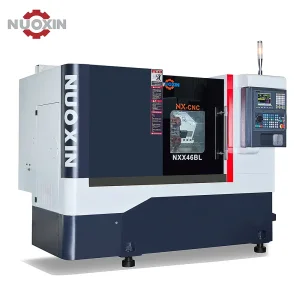
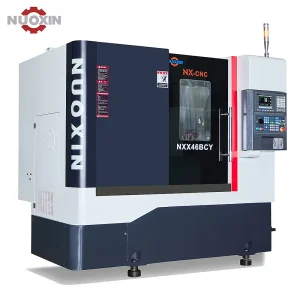
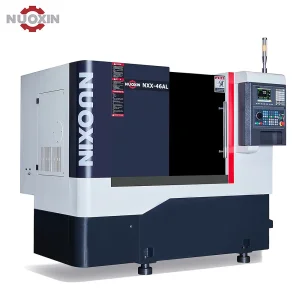
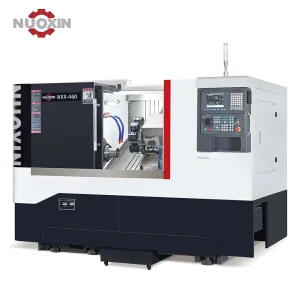
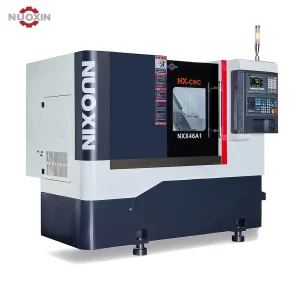
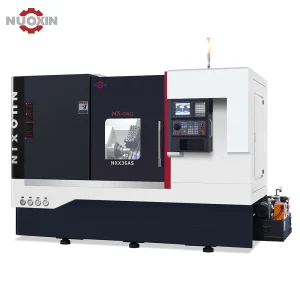
The global manufacturing ecosystem is undergoing an unprecedented transition driven by intelligent automation, tighter geometric tolerances, and the critical need for operational agility. Within this shifting paradigm, computer numerical control (CNC) machine tools act as the foundational bedrock for high-integrity production. From complex aerospace structural brackets and high-speed electrical vehicle (EV) rotor shafts to microscopically precise optoelectronical housings, modern components require manufacturing equipment designed to handle continuous thermal fluctuation, multi-axis synchronization, and diverse material properties.
Today's procurement strategies have evolved beyond simple upfront capital expenditure evaluations. Advanced engineering buyers utilize rigorous User Intent Mining matrices to determine the total lifetime value, kinematic structural rigidity, and integration capability of a machine tool. A modern CNC platform must deliver structural damping, minimize tool deflection, and offer localized configuration options. These dynamics form the core of industrial competitiveness: ensuring that every micron of precision is repeatable over thousands of continuous operating hours.
Structural symmetry in headstocks, casting beds, and tailstock mounts prevents non-linear thermal expansion. This ensures consistent tolerances even when spindle runouts scale up to maximum continuous RPMs.
By engineering casting beds at a 30-degree or 45-degree angle, gravity becomes an asset. Damping capacity scales up, chip removal is instantaneous, and tooling stability is significantly enhanced.
Integrating turning, milling, and axis drilling capabilities on a single platform decreases set-up times and eliminates positioning stack-up errors across multiple production work cells.
Established in 2004, Zhongshan Nuoxin Intelligent Equipment Co., Ltd. has developed into a premier national high-tech enterprise. Over two decades of continuous R&D have established Nuoxin as a leader in high-performance CNC lathes, turn-mill centers, and specialized manufacturing solutions.
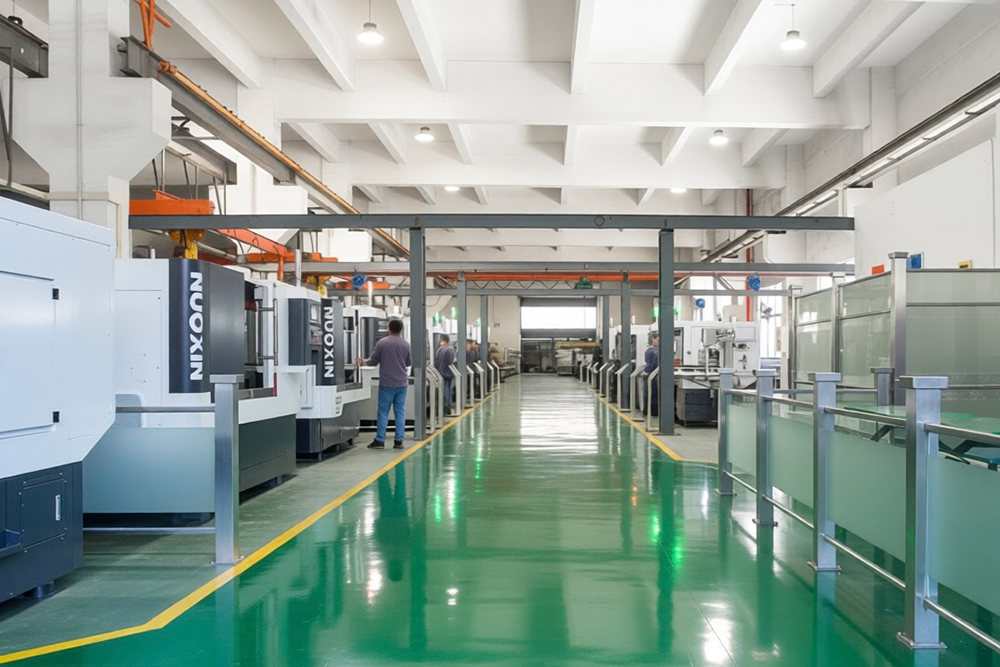
Our expansive 20,000 square meter factory in the Zhongshan Industrial Zone features advanced manufacturing tooling, component testing bays, and strict assembly lines. Guided by international ISO9001 and ISO14001 quality systems, our engineers maintain control over the entire production cycle—from structural casting design to final positioning calibration using laser interferometers.
We hold numerous patents for our innovative slant bed designs, gang tool kinematics, and tailstock mechanisms. Beyond manufacturing hardware, Nuoxin provides a complete processing system: delivering engineering simulations, operator certifying training, and responsive localized technical support.
A single machine tool cannot address the distinct needs of every industry. We design and deliver custom industrial configurations engineered for specific material and production challenges.
Aviation & Aerospace: Machining high-alloy parts requires maximum structural damping to reduce vibration. Our high-torque slant bed lathes process materials like titanium, Inconel, and aviation-grade aluminum with high surface quality and minimal tool wear.
EV & Automotive Powertrain: Modern automotive lines rely on high throughput, zero-downtime reliability, and tight dimensional tolerances. Nuoxin’s automated twin-spindle systems support robot-arm feeding, delivering high production rates for drive shafts and transmission gears.
Medical & Surgical Implants: Manufacturing titanium bone screws, dental implants, and micro-tools demands precision. Our turn-mill systems feature fine-pitch ball screws and high-resolution optical encoders to secure micro-positioning accuracy down to 2 microns.
Plumbing, Lighting & Valves: High-volume brass and alloy components benefit from gang-tool configurations. By eliminating turret indexing pauses, cycle times drop by 20% to 35% compared to conventional tooling systems.
Deploying advanced CNC machinery globally requires navigating regulatory frameworks, electrical certifications, and localized field service support. Nuoxin simplifies this process for procurement officers and plant managers.
Every machine is configured to meet the electrical, environmental, and safety regulations of the destination country. This includes compliance with CE directives for the European Economic Area, UL-conforming industrial control cabinets for North America, and rigorous electromagnetic compatibility standardizations.
Furthermore, our engineering teams address the challenge of factory floor integration. We offer comprehensive configuration services including customized voltage transformers, fieldbus protocols (Profinet, EtherCAT, Modbus), and automated loading interfaces (gantry loader or bar feeder integration) to align with existing production lines.
As the industry moves toward autonomous manufacturing, Nuoxin’s engineering division is focusing on three key technology pillars:
Using thermal sensors placed throughout the machine casting, real-time feedback loops adjust axis offsets dynamically. This minimizes tool center point drift during shifts in ambient factory temperatures.
Our dual-spindle models support balanced roughing and finishing. Automated part-handovers between primary and secondary spindles occur on the fly, eliminating secondary operation setups.
We are integrating Minimum Quantity Lubrication (MQL) and regenerative braking spindle motors. These features lower coolant waste disposal costs and reduce energy consumption by up to 30% compared to traditional models.
Review detailed answers to standard engineering and purchasing questions regarding the design, operation, and reliability of our slant bed turn-mill centers.
A slant bed casting (engineered at a 30° or 45° angle) improves performance in three key areas: First, it provides better chip control, allowing hot metal chips and coolant to fall away from the workpiece and linear guideways. Second, the design places the linear guideways closer to the center of gravity of the carriage, reducing structural torsional forces during heavy cuts. Third, it increases overall structural damping, which minimizes tool vibrations and improves surface finish quality.
Live tooling turns a standard CNC lathe into a multitasking turn-mill center. By adding dynamic power tools to the rotary turret and utilizing C-axis spindle interpolation, engineers can turn, drill, tap, and mill cross-slots in a single setup. This reduces production cycle times by eliminating the need to transfer components to secondary milling centers, which prevents alignment and positioning errors caused by manual part handling.
To ensure high speed, long service life, and precision, our key components are sourced from specialized partners. This includes high-precision linear guide systems and ball screws from THK or NSK, high-precision spindle bearings, and electronic control setups with Fanuc, Mitsubishi, or Yaskawa servo drives and motors.
We provide a structured installation process. Every machine tool is pre-commissioned, calibrated, and run through a 72-hour dry-run process at our factory before shipping. Upon delivery, we coordinate with localized field technicians or send our own service team to supervise placement, connect power, and perform geometric checks. We also offer on-site or remote training covering operating logic, program entry, and maintenance procedures.
Our twin-spindle lathes feature a primary spindle and a secondary (sub) spindle aligned coaxially. After the primary spindle finishes machining the front of the part, the sub-spindle advances, clamps onto the part, and pulls it forward. The main spindle chuck releases, the parting tool cuts the component, and the sub-spindle retracts to machine the rear details. This allows for continuous production of complex components with no manual intervention.
Maintaining high tolerances requires checking lube oil levels daily, cleaning raw chips from telescopic covers, and monitoring the pneumatic pressure of the system. Weekly tasks include cleaning the coolant tank and filters. On a semi-annual basis, leveling accuracy should be verified, and ball screws should be inspected for backlash. Our CNC controllers feature diagnostic interfaces that alert operators when service intervals are reached.
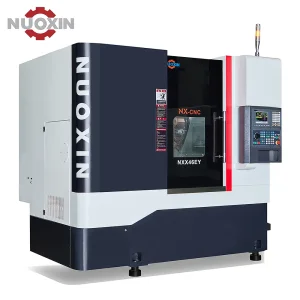
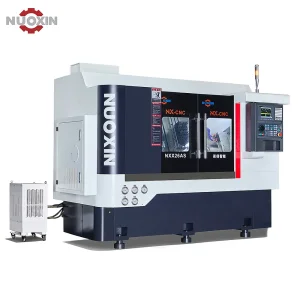
Explore our additional line of specialized high-precision turning platforms, dual-spindle models, and OEM-configured CNC equipment designed for versatile factory floors.
 Nuoxin