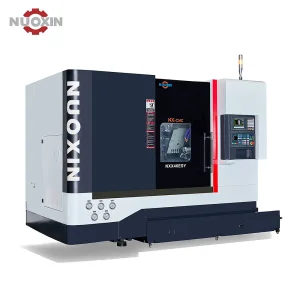
High-rigidity slant-bed architectures engineered for aerospace, automotive, and medical toolmaking.
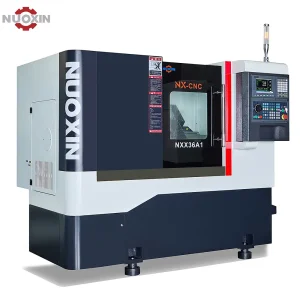
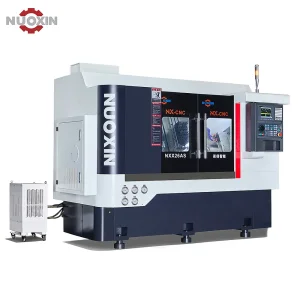
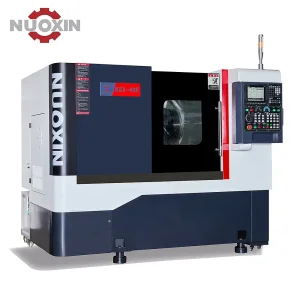
How Modern Lathes are Driving High-Efficiency Precision Production Floors Globally

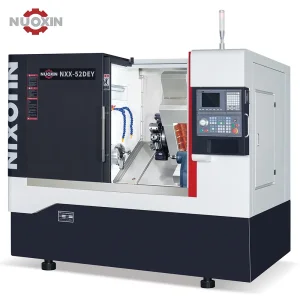
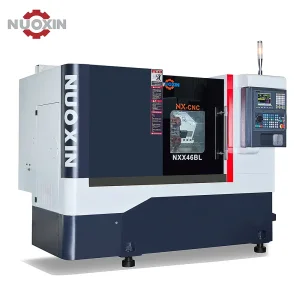
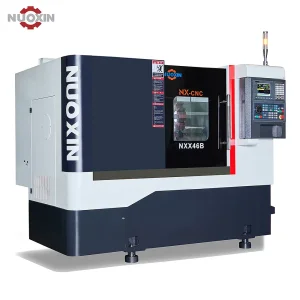
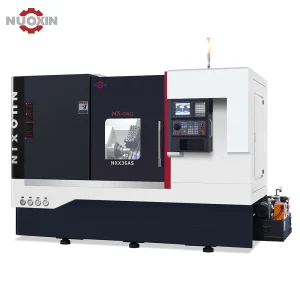
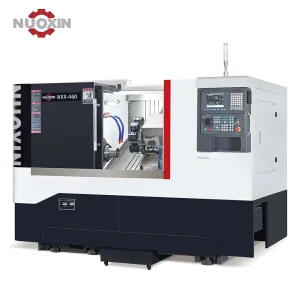
In modern industrial machining, precision is heavily impacted by structural integrity and thermal management. Traditional flat-bed lathes are increasingly replaced by 30-degree and 45-degree slant-bed designs. This structure minimizes the distance from the tool tip to the guide rails, providing superior torsional rigidity during heavy roughing cuts.
Gravity plays a beneficial role here. In a slant-bed configuration, thermal growth is directed predictably, and hot metal chips drop directly into the chip conveyor without collecting on the ways. This prevents dimensional drift during continuous shifts, ensuring consistent accuracy for automotive and aerospace components.
Multi-tasking turn-mill centers eliminate secondary operations by completing milling, drilling, and tapping on a single machine, reducing part handling time by up to 45%.
Modern symmetric bed layouts utilize advanced cooling channels around spindle cartridges to limit thermal expansion, keeping spindle runout under 0.003mm.
Integrating high-speed digital servos with optical scale feedback allows real-time positioning corrections, supporting micrometer-level precision.
Navigating CAPEX, Long-term Reliability, and Technical Performance Benchmarks
Sourcing procurement teams often look beyond initial capital expenditure (CAPEX). A machine’s long-term value is determined by operational reliability, power efficiency, and uptime SLAs. Selecting the right CNC lathe requires evaluating components like the casting quality (Meehanite cast iron is preferred for dampening vibrations) and linear guide rail design (roller type versus ball type).
Additionally, selecting between gang-tooling layouts (suited for rapid cycles on smaller, simpler parts) and rotary turrets (necessary for complex profiles requiring multiple tool changes) is a key decision during the sourcing process. Sourcing from certified factories ensures spare parts are readily available, protecting against unplanned downtime.
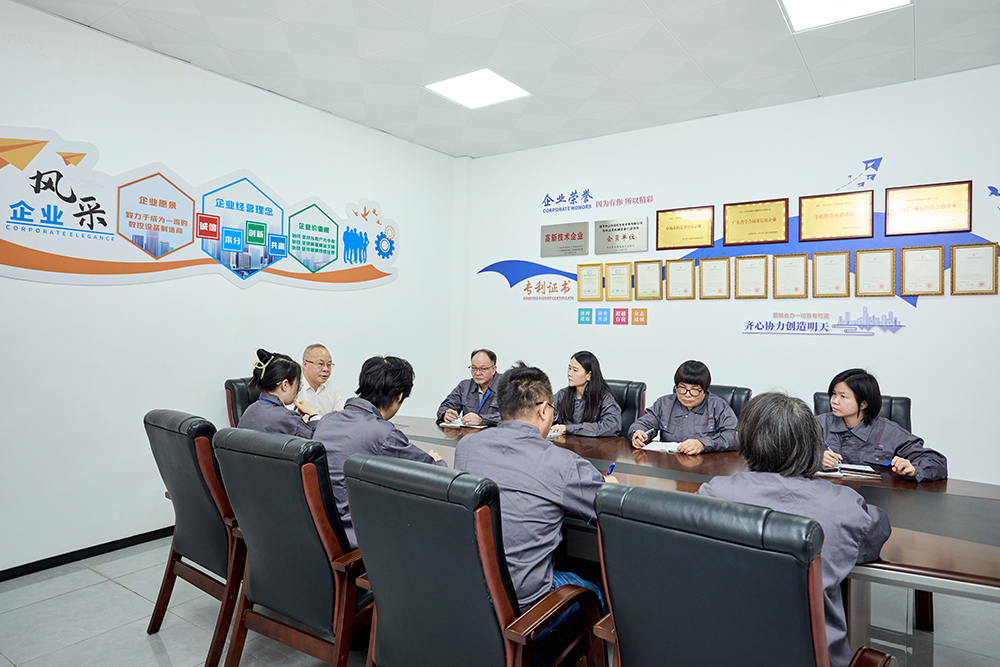
Engineered CNC configurations tailored for high-demand industrial sectors.
Turning challenging alloys (titanium, Inconel) requires high torque and rigid tool positioning. Our heavy-duty slant-bed machines provide the necessary stability to prevent tool deflection, maintaining close tolerances across long production runs.
High-volume automotive manufacturing requires fast cycle times and reliable repeatability. Our twin-spindle, multi-tasking centers allow simultaneous machining of front and back sides of complex transmission and engine shafts.
Bone screws, dental implants, and surgical components require clean finishes and tight tolerances. Gang-tool machines and high-speed spindles deliver micro-machining capabilities on compact footprints.
For custom job shops, versatility is essential. Our slant-bed CNC machines with live tooling allow quick transitions from simple turning tasks to complex milling operations, reducing setup times.
Complete lifecycle management, from factory floor planning to international certifications.
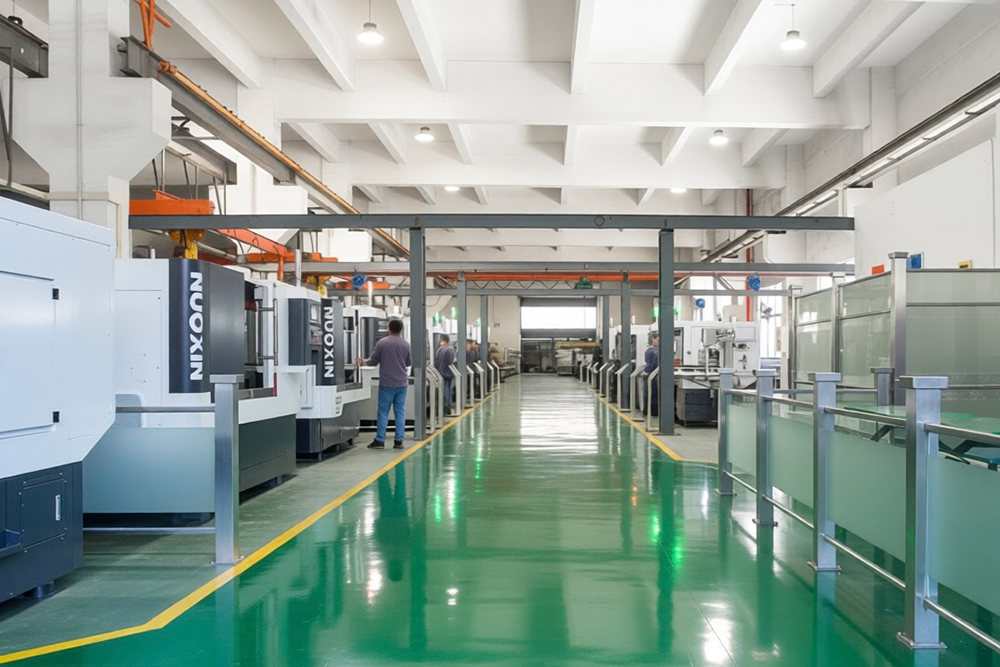
Zhongshan Nuoxin Intelligent Equipment Co., Ltd. provides support at every stage of machine adoption. Prior to purchase, we offer feasibility analysis, cycle time estimates, and custom clamping design. Following delivery, our service engineers assist with installation, commissioning, and staff training to ensure smooth integration.
Maintaining high uptime requires quick technical support. Our customer support system offers clear response times and a steady supply of spare parts. Nuoxin is committed to helping clients maintain production schedules and achieve reliable output.
Integrating Industry 4.0, IoT Monitoring, and Advanced Automation
Future CNC controllers will analyze spindle vibration and drive current in real time, detecting tool wear and bearing deterioration before defects occur, reducing unexpected downtime.
Standardizing the mechanical interfaces on our NXX lathe series allows direct integration with collaborative robot arms for automated loading and unloading, supporting lights-out production.
Integrating temperature sensors within the machine frame enables the controller to adjust for thermal expansion dynamically, maintaining positioning accuracy during fluctuating shop floor temperatures.
Regenerative drives recover braking energy from the spindle, returning it to the electrical grid. This, paired with optimized cutting cycles, reduces overall power consumption by up to 20%.
Answers to common questions regarding CNC configuration, sourcing, and machine selection.
Why choose a slant-bed CNC lathe over a flat-bed lathe?
Slant-bed lathes offer advantages in structural rigidity, thermal management, and chip clearing. The angled bed (30° or 45°) allows chips and coolant to drain directly into the collection trough, preventing chip build-up. This design also shortens the distance from the tool tip to the guide rails, reducing vibration during heavy-duty turning.
What is the difference between a gang-tooling configuration and a rotary turret?
Gang tooling mounts tools side-by-side on a cross-slide, allowing fast tool changes (essentially the time it takes the slide to move), making it suitable for high-volume, small-diameter parts. A rotary turret rotates to bring the selected tool into position, accommodating a wider variety of tools for more complex, larger workpieces.
How does a twin-spindle CNC configuration improve cycle time?
A twin-spindle setup features a main spindle and a sub-spindle. When the main spindle completes machining the front of a part, the sub-spindle automatically grips the part, cuts it off, and performs backside machining. This process allows front and back operations to run concurrently, eliminating secondary handling and reducing cycle times.
What quality standards do Zhongshan Nuoxin machines meet?
Our manufacturing processes are certified under the ISO 9001 quality management system and the ISO 14001 environmental management system. Each machine undergoes run-in tests, laser interferometer calibration, and structural checks prior to shipment to ensure consistent precision.
What is included in the after-sales technical service agreement?
Our standard support agreement covers pre-sale layout design, tool selection guidance, and setup assistance. We provide on-site installation, programming training, and technical support to keep your operations running smoothly.
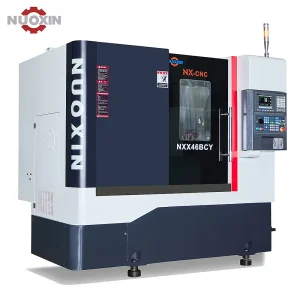
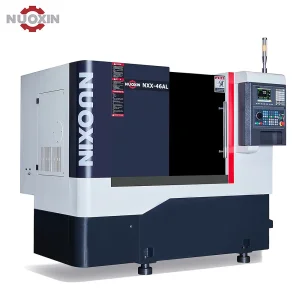
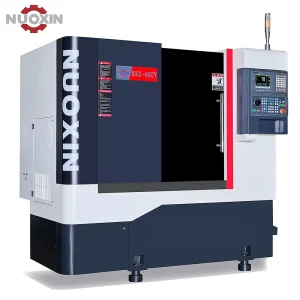
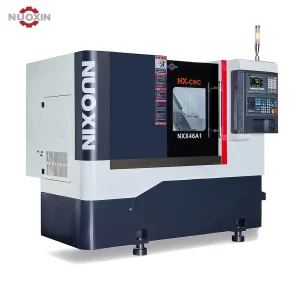
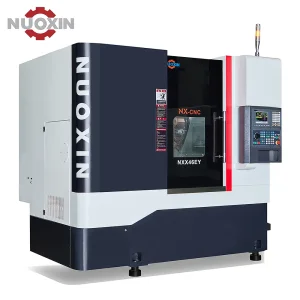
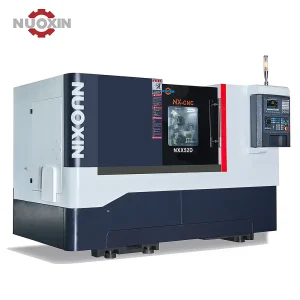
Explore our high-performance turning equipment designed for industrial applications.
 Nuoxin