Explore our top-tier engineering configurations, featuring high rigidity slant beds, indexing servo turrets, and live tooling systems designed to streamline complex machining routines.
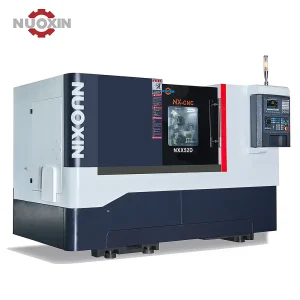
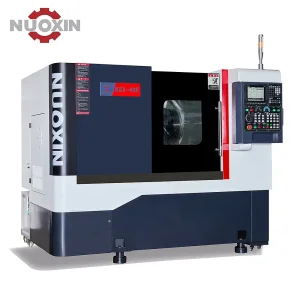
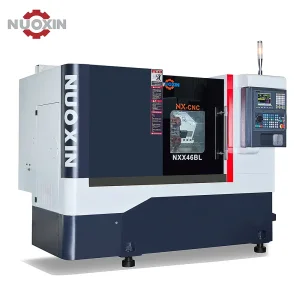
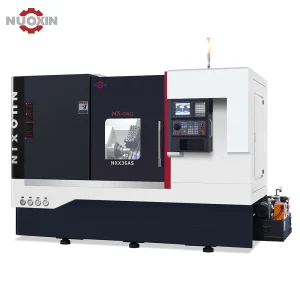
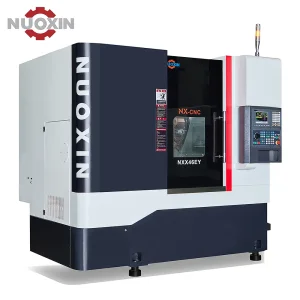
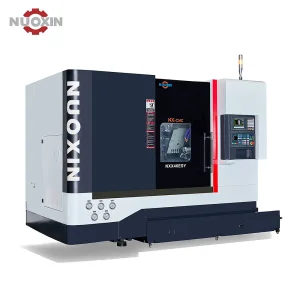
In high-precision manufacturing, the horizontal turning lathe continues to serve as the technological backbone of cylindrical workpiece machining. Unlike traditional flat-bed designs, modern industrial applications increasingly demand the integration of inclined structures. The slant-bed configuration—commonly set at a 30-degree, 45-degree, or 60-degree angle—fundamentally changes the kinetic response of the machine tool during high-frequency cutting operations.
By aligning the cutting forces directly with the heavy-duty cast iron base, the slant-bed structure mitigates structural vibrations, enhances linear guideway thermal stability, and simplifies chip disposal. Gravity assists in directing high-temperature metal swarf straight to the chip conveyor, protecting the ball screws and optical scales from heat-induced expansion. In turn, precision components benefit from microscopic surface tolerance consistency and extended dimensional repeatability.
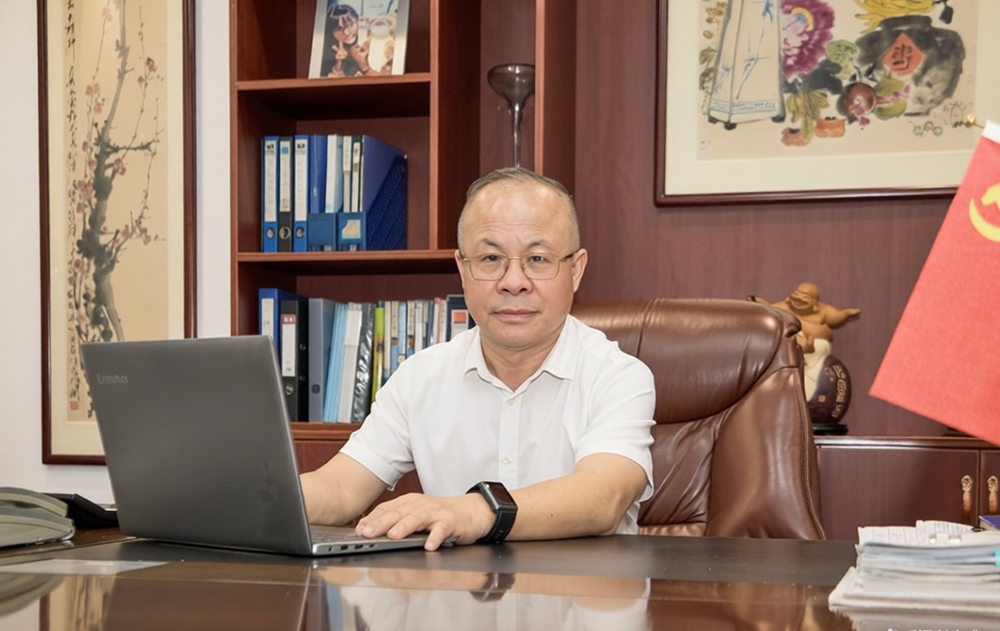
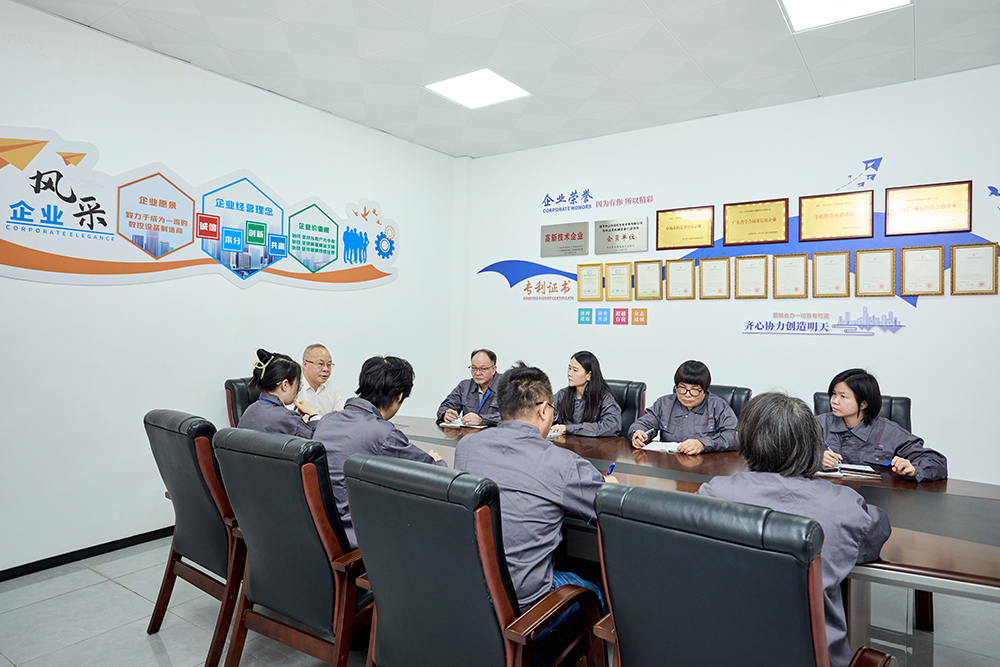
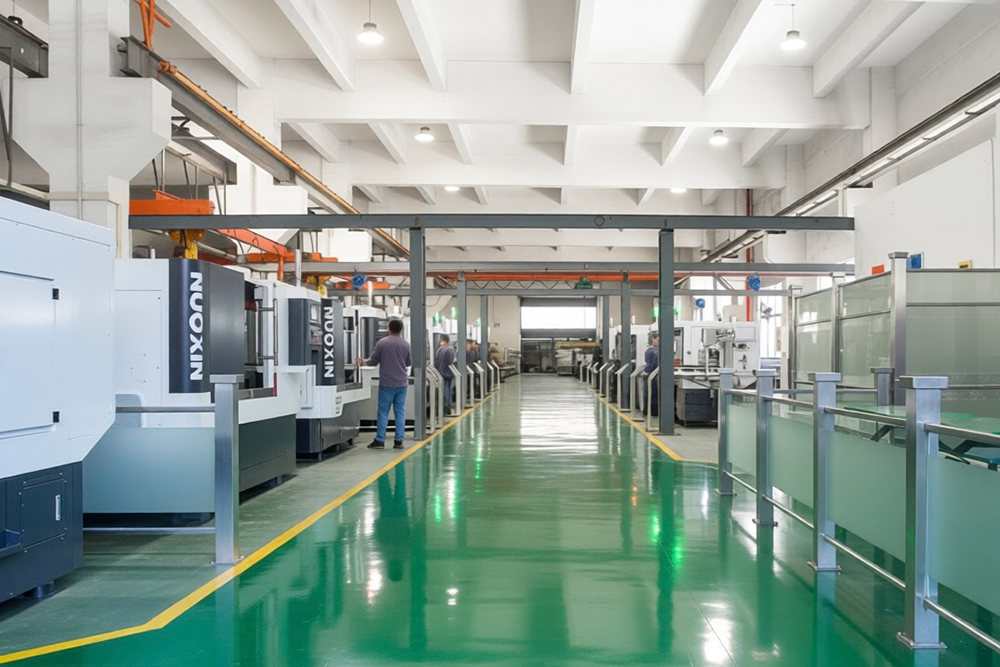
Zhongshan Nuoxin Intelligent Equipment Co., Ltd. was established in 2004 and has emerged as a premier, high-tech enterprise dedicated to advanced machining research. The company specializes in the R&D, engineering, and lean manufacturing of precision processing equipment, including CNC numerical control lathes, turning-milling combined centers, and high-performance vertical machining centers. Beyond machine delivery, Nuoxin is deeply committed to offering systemized engineering consulting, custom part-processing technology development, and operational training modules to ensure seamless production integration.
For more than two decades, Nuoxin has driven technological progress in the machine tool sector. Recognized as a "Guangdong Province High-tech Enterprise" and an active "Zhongshan Machinery Chamber Council Member Unit", Nuoxin prioritizes reliability. Our facility spans over 20,000 square meters of production space, where strict ISO9001 and ISO14001 quality and environmental protocols govern every step of assembly, spindle tuning, and tool turret alignment.
How procurement directors assess, validate, and integrate horizontal turning equipment within multi-national manufacturing ecosystems.
Procurement strategies highlight spindle runout tolerances (often <0.003mm) and BMT/VDI turret indexing speeds. Rigidity determines the machine's ability to handle high-tensile alloys without premature tool wear or chatter.
Purchasing extends beyond initial capital expenditure. It includes electricity consumption curves, preventative maintenance intervals, structural cast iron damping, and the availability of direct OEM components.
Global standards require CE compliance, integrated safety interlocks, fire suppression systems, and low-emission mist extraction. These features protect operators while maintaining high-speed production runs.
Translating turning capability into real-world production metrics across automotive, aerospace, and medical engineering.
The shift to electric vehicles (EVs) requires high-precision motor shafts and gear rotors. These components require tight runout tolerances and geometric concentricity. Nuoxin's twin-spindle, multi-axis slant bed CNC lathes allow for concurrent machining of both ends of a shaft, removing stacking errors and maintaining high balance metrics at 15,000+ RPM speeds.
Aerospace projects use high-temperature superalloys, titanium, and Inconel. Machining these materials requires rigid machine frames and stable tooling platforms. Our heavy-duty linear guide systems and high-pressure through-spindle coolant setups manage heat and control tool wear during extended operations.
Producing micro-surgical tools, dental implants, and laser components requires sub-micron resolution. Nuoxin's turn-mill machines incorporate specialized Swiss-type guide bushings and high-RPM spindles, allowing complex machining from bar stocks in a single pass.
A look at upcoming developments in turning technology, machine connectivity, and automated operations.
Machine tools generate internal heat from high-speed spindle operations. Our upcoming controller configurations feature real-time thermal compensation. Thermal sensors monitor temperature changes across the casting, adjusting axis coordinates in real-time to keep deviations under 3 microns.
Using standard OPC-UA and MTConnect protocols, Nuoxin lathes integrate directly with manufacturing execution systems (MES). Operators can view real-time efficiency metrics, monitor tool wear patterns, and perform predictive maintenance from a single dashboard.
Regenerative servo drives capture deceleration energy and return it to the power grid, helping meet modern ISO14001 sustainability targets. Combined with minimal quantity lubrication (MQL) systems, coolant usage is minimized, reducing both operational costs and waste disposal requirements.
Expanding manufacturing capacity across borders requires more than just machine shipment. It demands comprehensive regional compliance and hands-on technical support. Nuoxin's export machinery meets strict international standards, including European CE directives and North American UL/CSA electrical control specifications.
We establish regional distributor partnerships and localized service centers to deliver prompt technical support. This network covers initial rigging, leveling, site commissioning, and post-installation tuning. Our training packages ensure operating teams master the CNC interface, tool offsets, and safe operations from day one.
We prioritize rapid spare parts logistics, maintaining critical components like spindles, turrets, guide rails, and sensors in regional warehouses. This system minimizes downtime, keeping your production lines operating efficiently.
Looking to the future, our company will consistently adhere to the business philosophy of "honesty, responsibility, innovation, and win-win", and implement the quality policy of "quality improvement, customer satisfaction first". We will continue to improve and provide continuous services to offer customers higher-quality products and more satisfactory services! We look forward to your visit and cooperation!
Detailed engineering answers to key technical questions about horizontal slant bed turning systems.
Answer: The slant bed design offers three key benefits. First, it aligns cutting forces directly with the heavy machine base, increasing rigidity and reducing chatter. Second, gravity helps chips slide easily into the chip conveyor, keeping waste heat away from the workpiece and axis components. Third, the layout provides easier operator access to the chuck and tooling, simplifying setup and part changes.
Answer: Servo power turrets use high-torque motors to index tools faster and lock them securely with curved coupling rings, typically in under 0.2 seconds. Additionally, they can run live tooling for cross-drilling, tapping, and keyway milling directly on the lathe. This allows multi-process operations to be completed in one setup, reducing cycle times and eliminating transfer errors.
Answer: Twin-spindle systems support synchronous workpiece transfers. The primary spindle handles front-end machining, then passes the part to the sub-spindle for back-end operations while still rotating. This setup enables continuous, two-sided machining without manual intervention, making it ideal for robotic loading systems and high-volume production.
Answer: We use high-grade Meehanite cast iron that undergoes stress-relief heat treatment to prevent structural deformation over time. All guide rails, ball screws, and spindle bearings are precision-fit in temperature-controlled assembly rooms. The integrated axis design and cooling paths help dissipate spindle heat, maintaining thermal stability and consistent tolerances during continuous operation.
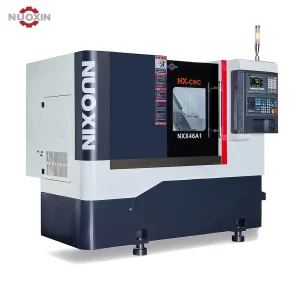
Review our extended line of custom slant bed CNC lathes and multi-spindle turn-mill centers configured for diverse production requirements.
 Nuoxin