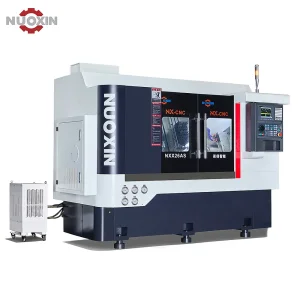
Explore our premium grade CNC lathes engineered for synchronous dual-spindle operations, live tooling, and maximum throughput.
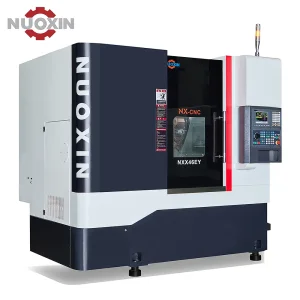
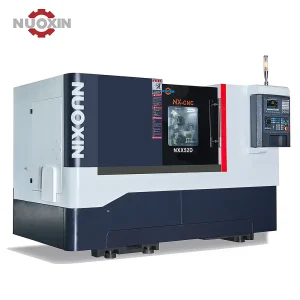
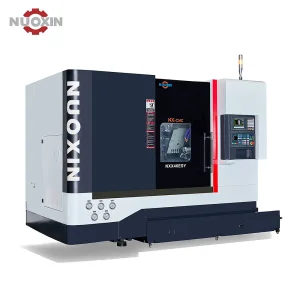
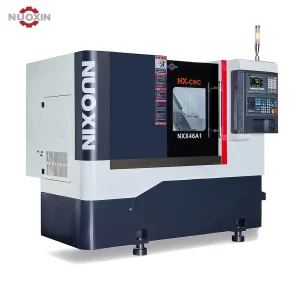
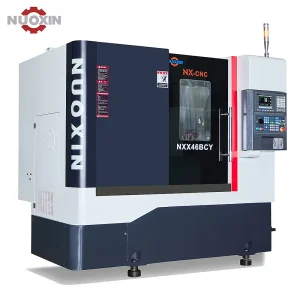
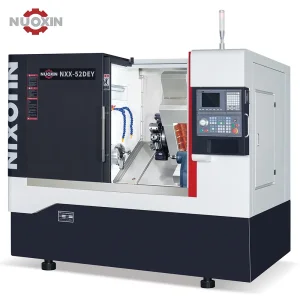
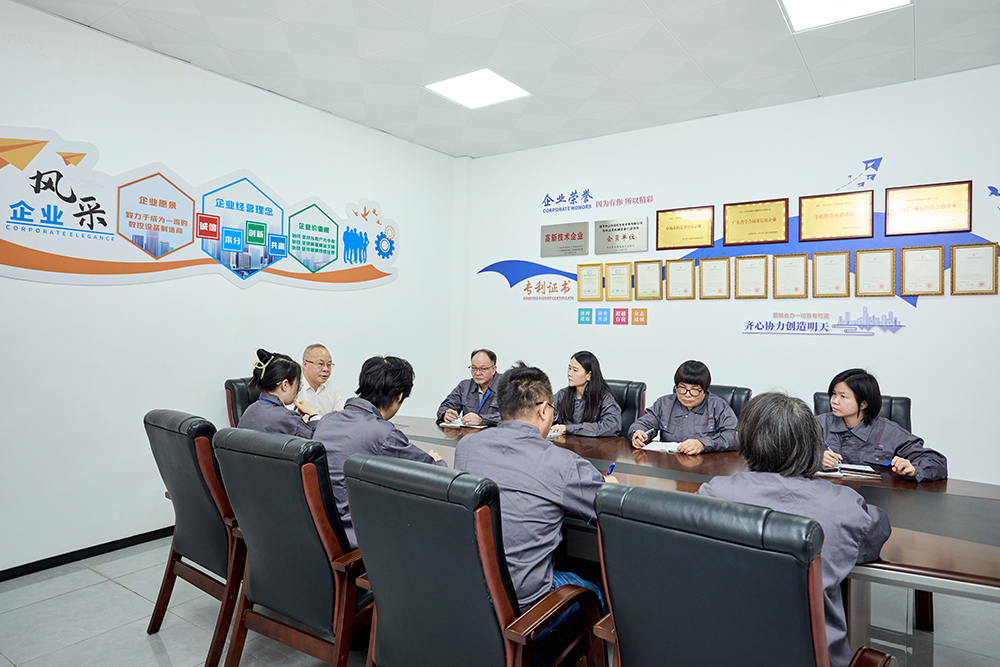
Established in 2004, Zhongshan Nuoxin Intelligent Equipment Co., Ltd. is a premier high-tech enterprise specializing in the R&D, design, and manufacturing of high-performance CNC numerical control lathes, turning-milling multi-tasking centers, and vertical machining centers. With more than 20 years of deep specialization in the machinery industry, we deliver end-to-end integration—from pre-sale engineering evaluation and operational training to comprehensive global after-sales maintenance.
Recognized as a "Guangdong Province High-tech Enterprise" and a prestigious "Zhongshan Machinery Chamber Council Member Unit", Nuoxin is driven by a singular mission: engineering highly rigid, thermally symmetric machine tools that unlock real business value, optimize operational cycle times, and meet the strict precision constraints of modern machining facilities.
Understanding the economic and technical variables driving global supply chain evaluations for advanced machining assets.
Modern procurement directors focus beyond initial capital expenditure. Buying a twin spindle CNC lathe directly yields up to 40% savings in floor space requirements and reduces the headcount of operators. By executing secondary operations on the sub-spindle, companies avoid purchasing separate machines for back-finishing.
Throughput is the baseline of industrial profitability. The capability for superposition machining—where both main and sub-spindles work simultaneously on two different components or the same workpiece—dramatically lowers cycle times. Sourcing agents look for manufacturers that calculate realistic ROI models based on standard cycle simulations.
For aerospace, automotive, and medical component production, component traceability and machining precision are non-negotiable. Industrial buyers require partners that possess robust ISO9001 and ISO14001 certificates alongside casting test reports confirming structural integrity.
How Nuoxin's twin spindle CNC lathes address critical requirements across complex global supply sectors.
High-volume automotive manufacturing demands minimal setup times and absolute repeatability. Twin spindle machines solve this by machining complex transmission shafts, fuel injector nozzles, and steering linkages in a single cycle. With secondary operations automated on the back-spindle, the output achieves tight concentricity parameters crucial for power transmission reliability.
Our solutions incorporate specialized high-torque live tooling turrets, allowing milling, drilling, and tapping processes to happen on the same machine tool. This eliminates component transport between work cells, minimizing physical damage and inventory bottlenecks.
Orthopedic implants, surgical instrumentation, and bone screws require ultra-smooth finishes and zero surface micro-cracks. Sourcing a twin spindle CNC lathe with C-axis contouring and live tools allows manufacturing plants to machine delicate components out of high-grade titanium and PEEK materials.
By using synchronous sub-spindle parts catching systems, we ensure finished parts are gently extracted without surface scratching. This meets the sterile, functional, and aesthetic requirements mandated for class II and class III medical equipment.
Aerospace fittings must withstand immense pressure and thermal fluctuations. The precision required for cutting high-alloy materials (Inconel, Monel, Stainless Steel 316L) is achieved using Nuoxin's heavily ribbed cast-iron slant bed structures. The thermal displacement suppression systems embedded in our lathe spindles prevent dynamic alignment drift during long-run shifts.
Our engineering support provides complex tool-path optimization services to ensure perfect tool-wear management, reducing scrap rates of high-cost aerospace raw stock.
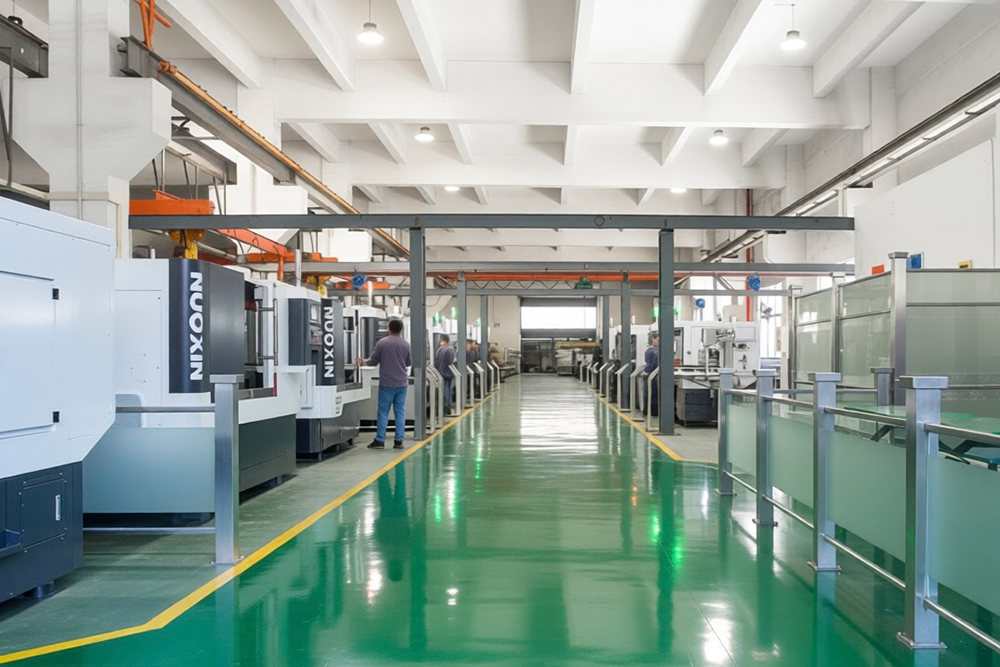
Industrial capabilities tested across 20 years of continuous refinement and technological upgrades.
The progression of multi-axis lathes from manual setup automation to AI-driven smart factories.
Minimizing structural deformation caused by spindle heat generation through finite element analysis (FEA). Future designs incorporate thermo-symmetric structures with integrated cooling jackets around both main and sub-spindles, assuring continuous sub-micron accuracy.
Our engineering roadmap prioritizes expanded Y-axis travel and compound B-axis milling heads, transforming the twin spindle CNC lathe from standard turning center into a 5-axis continuous multitasking center capable of machining parts of any geometric complexity.
Implementing smart sensory networks linked directly to factory ERPs. Real-time vibration sensors on spindles detect early stage bearing wear, preventing expensive crashes. Integrated digital twin modules permit offline programming and simulation, reducing setup check times to zero.
Exporting industrial machinery internationally demands complete compliance with local codes. Our CNC machines are built in strict accordance with CE Directives, ensuring compliance in electrical systems, electromagnetic compatibility, and machine guarding.
Our integration options support major controller configurations preferred by operators worldwide, including FANUC, Siemens, Mitsubishi, and Syntec. This compatibility ensures that your tooling shop will not need to spend time retraining operators on unfamiliar CNC architectures.
Additionally, all environmental parameters align with ISO14001 protocols, minimizing fluid and lubricant waste while maximizing power-use efficiency.
Nuoxin provides comprehensive lifecycle security for your investment. Our service architecture starts with Pre-sale technical analysis where our application engineers run your CAD models through our simulation engines to project cycle times and select optimal tooling configurations.
Following delivery, our professional technicians handle the physical placement, leveling, and testing of your twin-spindle setup. We conduct on-site instruction for your machine operators, detailing optimal program configurations, tool selection, and standard preventative maintenance.
Our prompt global response system reduces machine downtime by maintaining stock of critical spare parts and dispatching qualified field engineers on demand.
Providing the correct technical variables to ensure fast, accurate, and optimized factory quotes.
When requesting quotes for an OEM Twin Spindle CNC Lathe, providing structured details speeds up the engineering check and guarantees optimal component choices. Keep the following checklist in mind:
Specify material grades (e.g., Titanium Gr. 5, Aluminum 6061-T6, Hardened Steel) along with max diameter, length, and tolerances. This determines chuck sizing and spindle speed configurations.
Detail requirements for integrated bar feeders, parts accumulators, high-pressure coolant units, tool presetters, or automated gantry loaders to allow turnkey pricing calculations.
Select preferred CNC controls and indicate any mandatory electrical safety systems (such as UL/CSA or CE requirements) to match factory floor protocols.
Direct technical answers addressing the mechanical, control, and operational parameters of dual spindle CNC equipment.
A twin spindle CNC lathe features a main spindle and a sub-spindle (or back-spindle) that can synchronize at the exact same rotational speed (RPM). During a component run, the sub-spindle approaches, grips the partially machined workpiece, and separates it from the main stock. It then performs the back-end machining processes (like internal boring or face tapping) while the main spindle continues machining a new raw block. This overlapping execution cuts total cycle time by up to 50%.
The slant bed (typically angled at 30 or 45 degrees) uses gravity to direct metal chips and cooling fluids away from the linear guideways and ball screws. This prevents chip build-up, which can lead to thermal transfer and structural misalignment. In addition, the slant layout aligns the cutting force directly into the heavy cast iron base, improving rigidity and preventing tool vibration during heavy roughing cuts.
Yes. Live tooling (driven turret stations) allows the lathe to perform cross-drilling, pocket-milling, contouring, and tapping directly on the turning axis. When configured with a Y-axis, a twin spindle CNC lathe can execute complex off-center milling features. This eliminates the need to route components to secondary milling centers, improving accuracy and reducing total production times.
High-end CNC control configurations (such as Syntec or Fanuc dual-path systems) feature physical path interference detection. Through software simulations and physical limit switches, the control unit monitors the relative coordinates of both spindles. During synchronization, the sub-spindle speed and phase are locked precisely to the main spindle, ensuring a smooth, crash-free handoff.
Under controlled ambient temperatures, our premium line lathes deliver standard positioning tolerances within ±0.003 mm, with repeatability parameters reaching ±0.002 mm. Spindle runouts are measured and certified to be under 0.002 mm using high-grade NSK or FAG bearings, ensuring consistent performance for micro-machining projects.
Nuoxin provides a comprehensive operator onboarding framework. This includes CNC programming instructions (covering dual-path synchronization and sub-spindle handoff sequences), tooling selection guidelines, physical alignment calibration, and troubleshooting procedures. We offer both on-site factory training and remote video support to keep your production line running smoothly.
Review the second half of our manufacturing line-up, featuring gang-tool setups and customized turning solutions.
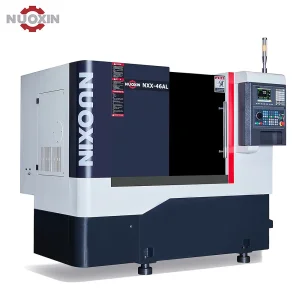
 Nuoxin