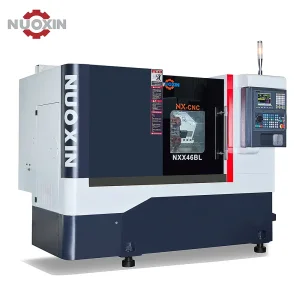
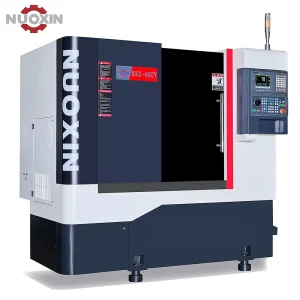
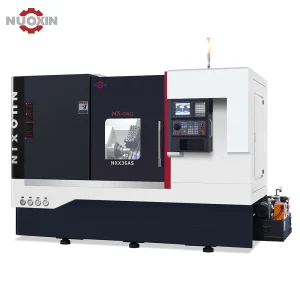
Explore our advanced CNC configurations featuring slant-bed rigidity, dual spindles, live tooling, and highly synchronized gang tooling systems.
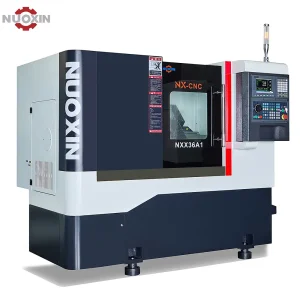
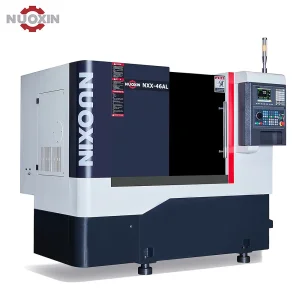
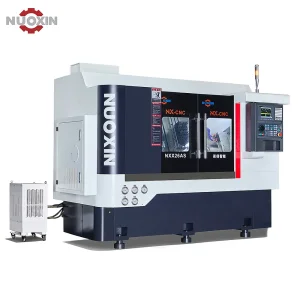
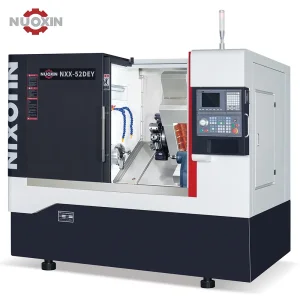
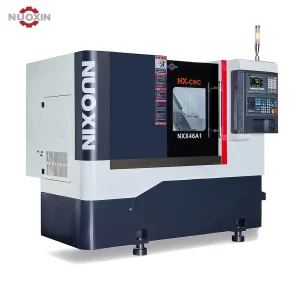
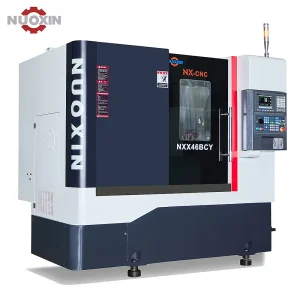
Established in 2004, Zhongshan Nuoxin Intelligent Equipment Co., Ltd. is a recognized national high-tech enterprise specializing in the research, development, and engineering of precision processing machinery. Over the past two decades, we have focused on producing cutting-edge CNC numerical control lathes, turn-mill combined multitasking machines, and high-rigidity vertical machining centers.
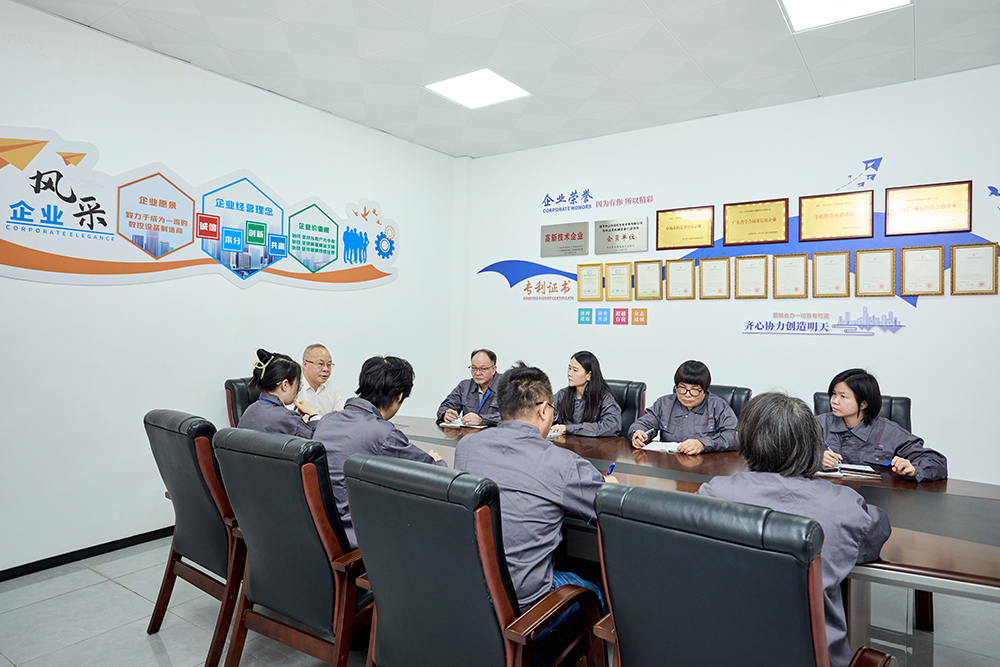
Nuoxin has become a benchmark in the CNC industry. Having received prestigious recognitions such as the "Guangdong Province High-tech Enterprise" and serving as the "Zhongshan Machinery Chamber Council Member Unit," our growth is supported by an active drive to innovate. We provide comprehensive, turnkey processing support and expert CNC operation training to eliminate operational downtime and ensure maximum efficiency for global supply chains.
Established Year
Factory Area (㎡)
Years Lathe Expertise
System Certified
Modern precision engineering demands components with increasingly tighter tolerances, complex geometries, and compressed lead times. Traditional sequential processing on separate turning and milling machines is no longer competitive due to alignment errors, handling hazards, and compounding setup times. The integration of axis milling technologies directly into turning lathes—known as turn-mill multi-tasking centers—has revolutionized manufacturing workflows.
The transition from 2-axis linear turning to multi-axis complex machining relies on several critical structural and electronic advancements:
Cast iron bases are normalized to relieve internal stresses, providing stability during heavy roughing cuts on high-tensile alloys.
Built-in cooling jackets inside high-power spindles manage heat dissipation, preventing axis drift during long-run batch cycles.
Integrated gang tooling systems and servo turrets allow multi-station tooling setups, drastically lowering tool change times.
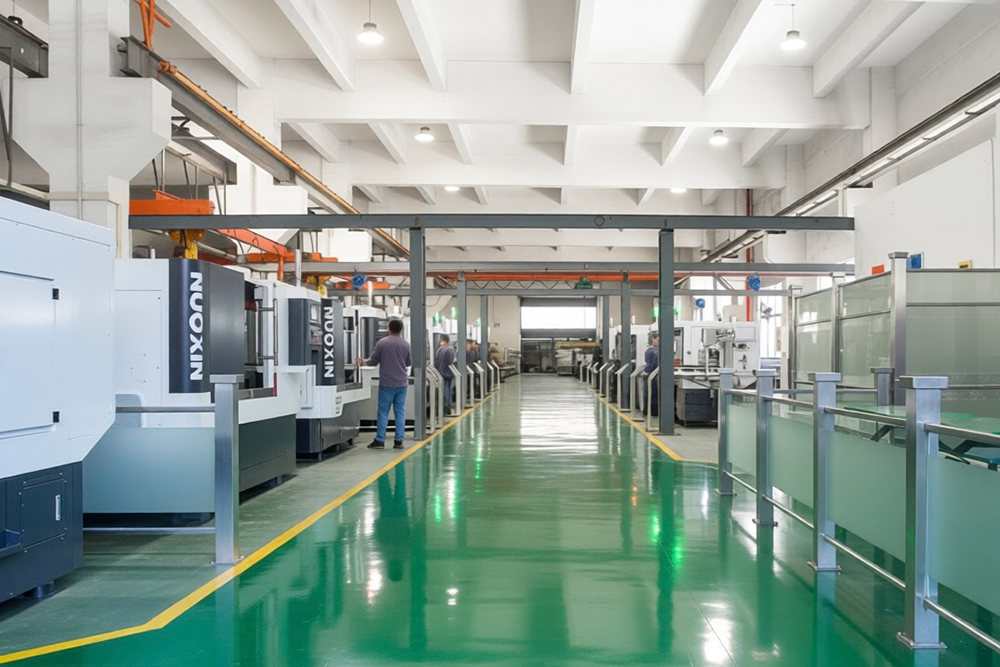
Nuoxin's manufacturing site spans over 20,000 square meters, utilizing structured flow lines to maintain consistency in machine assembly. Every stage of production, from raw casting inspection to final axis positioning checks, is guided by ISO 9001 and ISO 14001 certified quality protocols.
Our quality control engineers deploy advanced metrology tools, including Renishaw laser interferometers, to calibrate the positioning and repeatability metrics of every linear guide rail. Axis alignments are cross-checked, and dynamic balancing is performed on all main and secondary spindles to minimize resonance and guarantee mirror-like surface finishes.
Procurement directors and factory managers evaluating axis milling equipment must prioritize factors beyond initial unit costs. Supply chain resilience, operational flexibility, and energy efficiency are key variables. Nuoxin designs custom OEM solutions that target specific bottlenecks across major industrial sectors:
Aerospace manufacturing involves working with difficult-to-machine superalloys like Titanium, Inconel, and high-grade stainless steel. Nuoxin's high-rigidity CNC slant-bed machines provide the static stiffness and damping characteristics needed to prevent work-hardening of raw materials. This ensures precision cuts when machining engine valves, sensor housings, and complex fuel system manifolds.
The rapid transition toward electric vehicles (EVs) has altered part geometries. High-efficiency rotors, motor shafts, and complex aluminum casing brackets require high-speed turning combined with cross-axis drilling. Nuoxin's twin-spindle, multi-axis solutions enable uninterrupted, single-setup machining, drastically reducing part handling and cycle times.
Orthopedic implants, surgical instruments, and dental posts demand clean surface finishes and tight dimensional control. Our compact gang-tool CNC lathes, equipped with precision tooling configurations, meet these standards. They minimize spindle runout and support small-diameter operations down to microns.
As industry standards evolve toward smart manufacturing and digital twin integration, Nuoxin's technological roadmap focus includes:
Integrating vibration sensors and thermal monitoring systems directly into main spindle cartridges to warn operators of potential wear before failures occur.
Optimizing machining kinematics to support Minimum Quantity Lubrication (MQL) systems, minimizing coolant disposal and energy consumption.
Standardizing plug-and-play communication protocols to connect seamlessly with automatic bar feeders, robotic loading arms, and automated storage systems.
A reliable machine tool is only as good as the service system that supports it. At Nuoxin, we provide complete, step-by-step technical support. This ranges from initial pre-sale technical consultations and component cycle-time calculations to on-site commissioning and hands-on operational training.
Our experienced after-sales engineers respond quickly to maintenance inquiries, ensuring minimize downtime and uninterrupted production. By carrying a robust inventory of original spare parts at our headquarters, we maintain steady supply chains for all domestic and international clients.
Get professional, authoritative answers to help guide your choice of multi-axis CNC turn-mill machinery.
Gang tool layouts mount tools inline on a cross-slide. This design enables fast, direct axis indexing with minimal tool-to-tool transition time, making it ideal for compact, high-precision parts with short cycle times. Rotary turrets, especially servo-driven power turrets, support larger parts and offer higher tool station capacities. This allows you to set up complex, multi-operational processing sequences on a single machine.
A slant-bed design increases the machine's static rigidity by aligning linear guide rails directly with cutting force vectors. This minimizes thermal expansion along the X-axis, improves chip clearing, and reduces heat build-up. These features help maintain high positioning accuracy and extend tool life during continuous runs.
Modern CNC controllers use high-speed optical encoders to dynamically link the rotation of both spindles. During a workpiece handoff, the controller synchronizes their speeds and angular positions (C-axis phase alignment). This allows the sub-spindle to grip and transfer the running part under power, ensuring consistent alignment without requiring a machine pause.
Our operations comply with the ISO 9001 quality management system and the ISO 14001 environmental management standard. The integrity and engineering designs of our machinery are supported by multiple product invention patents and utility model patents registered throughout our 20-year history.
Standard model configurations are typically prepared and dispatched within 30 to 45 business days. Custom engineering requests—such as specialized automated loader interfaces, custom gang tool patterns, or custom chuck configurations—require detailed design approvals. This process generally runs on a 60 to 90-day production timeline, depending on part complexity.
Select from our targeted multi-tasking centers engineered to handle complex milling, turning, and thread-cutting routines.
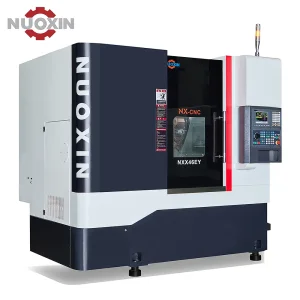
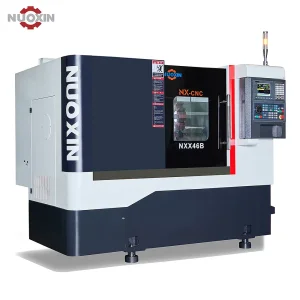
 Nuoxin