Explore our premium range of manufacturing systems designed for continuous, high-accuracy component production.
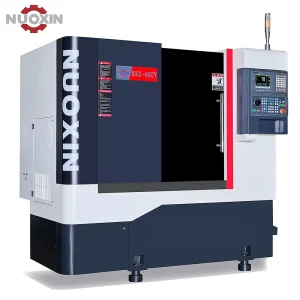
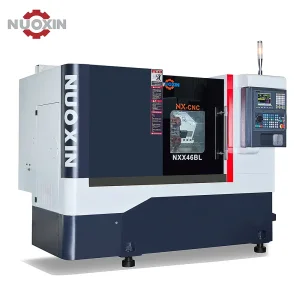
How Modern Smart Factories are Redeeming Cycle Times and Improving Quality Control via Multi-Spindle Processing
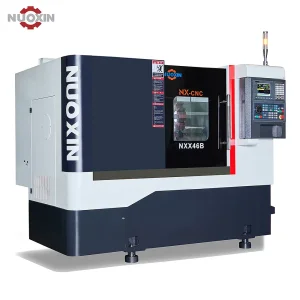
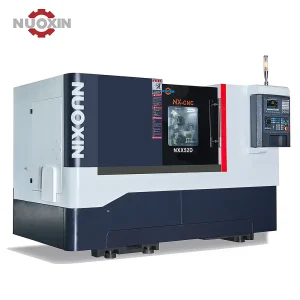
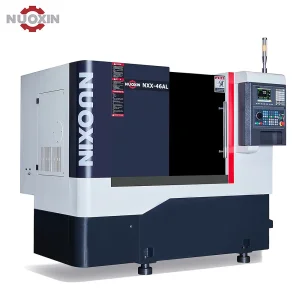
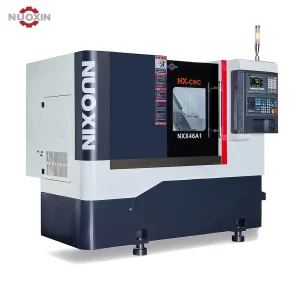
The global manufacturing ecosystem is facing an unprecedented shift. As demands for medical surgical components, micro-electronic connectors, aerospace valves, and electric vehicle (EV) fasteners surge, traditional processing methods fail to keep up with both quality tolerances and unit costs. The integration of Dual-Spindle Gang Tool CNC Lathes has emerged as the definitive solution for these complex industrial needs.
By pairing a primary spindle with a sub-spindle (or secondary spindle) alongside a gang-type tooling configuration, these specialized machines eliminate the indexing idle-time inherent to turret-based systems. Workpieces undergo secondary back-working operations seamlessly through automatic spindle handoff, completing complex multi-axis processes within a single machine footprint.
Seamlessly integrates with automatic bar feeders, gantry loaders, and robotic arms for true "lights-out" manufacturing operations over extended shifts.
Utilizes intelligent thermal expansion compensation models and real-time tool wear diagnostics to guarantee steady C-axis and Y-axis positioning.
Lower power consumption, minimized component fatigue, and shorter cycle durations optimize the Total Cost of Ownership (TCO) and maximize margin per part.
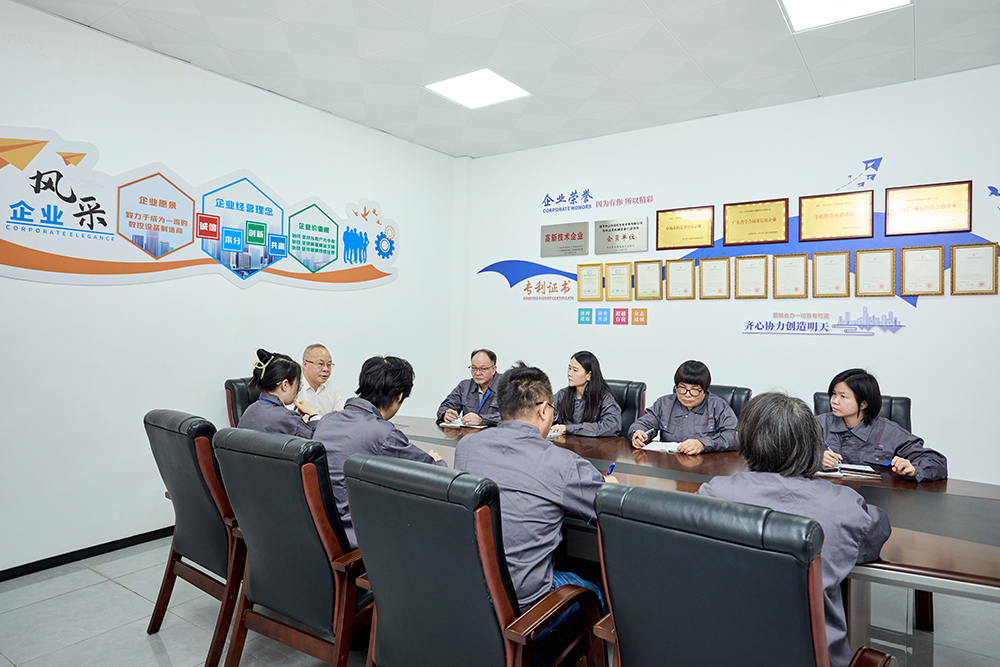
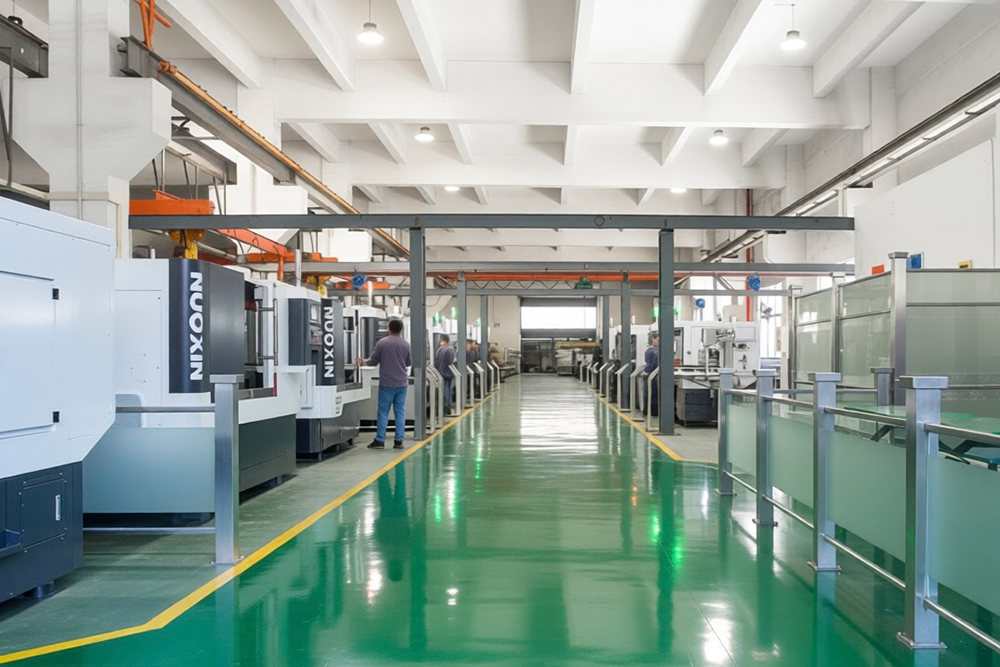
Established in 2004, Zhongshan Nuoxin Intelligent Equipment Co., Ltd. is a recognized high-tech enterprise at the forefront of the precision machinery industry. For over 20 years, we have dedicated our engineering expertise to the research, development, and production of high-performance CNC numerical control lathes, turning-milling combined centers, and vertical machining centers.
We are not just machine manufacturers; we are full-cycle manufacturing partners. Our services extend from supplying state-of-the-art machinery to offering in-depth CNC equipment operational training, custom-engineered tooling packages, and dependable post-installation support.
Years Industry Experience
Self-Owned Manufacturing Facility
ISO9001 & ISO14001 Standards
Engineered to replace slow traditional machining with ultra-stable, high-volume production setups.
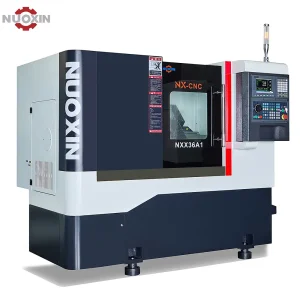
Our Custom Dual-Spindle Gang Tool CNC Lathes are constructed with high-rigidity structural bases to support high-speed machining without harmonic vibration.
Our machines serve critical high-precision sectors globally, offering reliable throughput across varied material compositions.
| Performance Feature | Traditional Single-Spindle Turret Lathe | Nuoxin Dual-Spindle Gang Tool CNC Lathe |
|---|---|---|
| Tool-to-Tool Index Time | 1.5 to 3.5 seconds (Turret Rotation) | 0.1 to 0.3 seconds (Linear Axis Movement) |
| Back-end Processing | Manual refixturing or secondary operation needed | 100% automated handoff to Sub-Spindle |
| Simultaneous Machining | Impossible (Single tool contact point) | Main spindle and Sub-spindle cut concurrently |
| Maintenance Complexity | High (Hydraulic/mechanical indexing gears) | Extremely low (Simplified linear arrangement) |
Our commitment to reliability goes far beyond the point of machine shipment.
Zhongshan Nuoxin Intelligent Equipment Co., Ltd. bridges the gap between hardware suppliers and engineering consultants. Our workflow is designed to minimize risk and ensure immediate production readiness:
Expert insights on selecting, operating, and optimizing your Dual-Spindle Gang Tool CNC systems.
A gang-tool CNC lathe mounts all tools on a flat, linear cross-slide table. To switch tools, the CNC machine quickly moves the X/Z axes to position the tool, eliminating the rotation index time of a turret (typically saving 1.5 to 3 seconds per cut). Gang tooling is simpler, has fewer moving parts, provides superior rigidity, and is faster for small parts, whereas a turret can hold more tools for large, complex workpieces.
During synchronous handoff, the CNC controller synchronizes the rotation speeds (RPM) and angular phases of both the main and sub-spindle (C-axis tracking). The sub-spindle moves forward on its independent linear guides to grip the part, the main spindle chuck releases, and the sub-spindle retracts to perform back-end machining (facing, centercutting, back-drilling) while the main spindle begins processing a new bar segment.
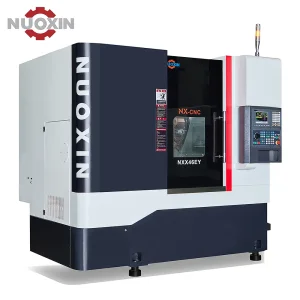
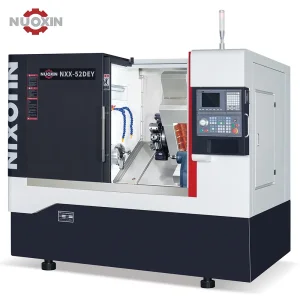
Yes. Many models, such as the NXX-46CY and NXX-52DEY, feature dedicated Y-axis and C-axis controls which allow the mounting of rotary tools (live-tool holders). This enables cross-drilling, milling, slotting, and off-center operations directly on the lathe, eliminating the need to move the component to a machining center.
Nuoxin implements a multi-phase quality control process under ISO 9001 management. Casting components are stress-relieved to avoid deformation. Critical positioning interfaces, such as linear guide ways and ball screws, are ground to sub-micron accuracy and verified using laser interferometers. Each spindle undergoes dynamic balancing, and final machine testing includes continuous dry-runs and actual test piece cutting before shipping.
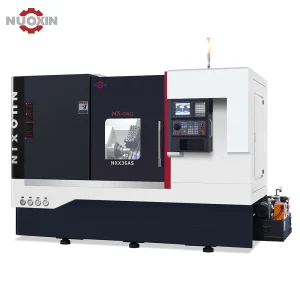
Optimize your line setup with these multi-axis, industrial-grade mill-turn centers.
 Nuoxin