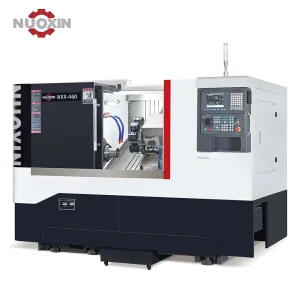
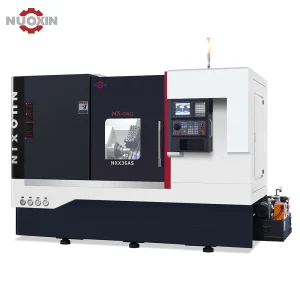
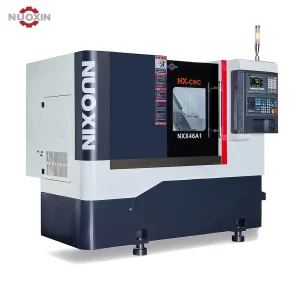
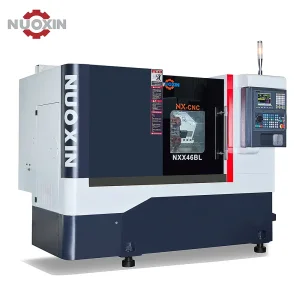
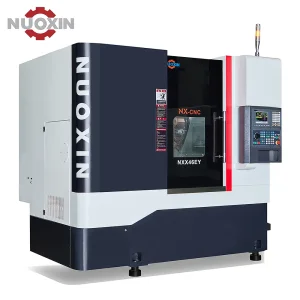
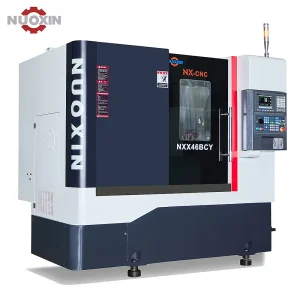
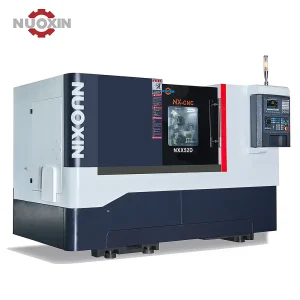
The manufacturing sector is undergoing an unprecedented technological renaissance. In an era dominated by rapid prototyping and high-mix, low-volume production runs, the demand for highly adaptive computer lathe machines (CNC Lathes) has reached new heights. Standard mechanical processing systems no longer suffice in terms of accuracy, scalability, and material adaptability.
Global procurement teams in automotive, aerospace, and medical equipment manufacturing are shifting focus towards unified machining configurations. Modern computer lathes are defined by their capacity to execute multiple operations—such as turning, milling, drilling, and tapping—within a single workspace. This eliminates setup times, reduces dimensional errors caused by repositioning, and ensures optimized manufacturing margins.
With the integration of AI-driven control systems and IoT modules, these machines are transforming into active nodes within the factory ecosystem. They monitor tool wear dynamically, compensate for thermal expansion in real-time, and feedback operational diagnostics directly to ERP networks. Understanding this transition is essential for any technical buyer looking to invest in long-term tooling assets.
When selecting a computer lathe machine product, engineering teams must evaluate structural geometry. The choice between a slant bed and a flat bed design directly impacts the structural rigidity, thermal stability, and overall longevity of the machinery.
Typically engineered at a 30° to 45° angle. The angular construction offers exceptional structural rigidity, allowing gravity to assist in natural chip evacuation, minimizing thermal distortion, and improving the precision of hard material machining.
Integrating servo-driven rotary turrets with Y-axis capabilities allows complex milling, off-center drilling, and keyway cutting on the lathe. This turn-mill capability replaces the need for a secondary milling operation entirely.
By coordinating a main and sub-spindle, the computer lathe can hand off workpieces automatically, machining both sides of a component in a single, continuous, unmanned cycle. Ideal for high-efficiency mass production.
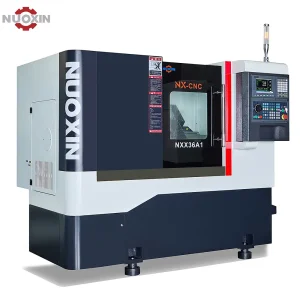
For high-intensity industrial applications, models such as the NXX-46D Slant Bed CNC Lathe incorporate heavy-duty linear guide rails and a hydraulic tailstock. This robust combination mitigates vibrations, ensuring that sub-micron geometric tolerances are met even during heavy roughing passes on high-alloy steel.
Technical Focus: A slant bed geometry reduces the physical distance between the tool tip, spindle center, and the structural base, reducing the torque moment arm. This leads to a substantial reduction in machine vibration, directly translating to longer tool lives and superior surface finishes (Ra < 0.4 μm).
Global supply chain logistics require robust partnerships with suppliers that can guarantee both quality and scalability. China's industrial ecosystems—specifically within advanced hubs like Zhongshan, Guangdong—provide unprecedented value. The integration of Industry 4.0 paradigms with localized components manufacturing allows for a level of speed and agility that cannot be matched by isolated regions.
By housing specialized manufacturing, custom castings casting, heat treatment, and precision assembly lines within a tight geographical proximity, companies like Zhongshan Nuoxin Intelligent Equipment Co., Ltd. can optimize manufacturing timelines. This localization minimizes raw material lead times and ensures a resilient supply chain structure capable of absorbing external economic shifts.
Additionally, rigorous quality management schemes like ISO9001 and ISO14001 are integrated at every step. From the initial stress-relieving aging process of cast iron beds to the final dynamic laser interferometer testing of axis positioning accuracy, every single component is certified to perform consistently under three-shift factory loads.
Modern industrial equipment must adapt to the unique geometric and material challenges of specific target markets. Nuoxin Intelligent Equipment caters to a broad selection of critical engineering sectors, offering specialized turning configurations designed for distinct materials and operations:
High-tolerance structural components like engine valves, steering knuckles, and drive shafts require high structural rigidity. Nuoxin slant-bed machines equipped with hydraulic tailstocks and high-torque spindles handle complex contours in high-tensile alloys with ease.
Surgical screws, implants, and optical camera barrels demand micrometer-level precision. Our small footprint, high-speed spindle turning centers and gang tool systems allow manufacturers to maintain rigid tolerances without thermal drift.
High-volume components like brass fittings, lighting housings, and appliance parts require fast cycle times. Multi-tool gang lathes and twin-spindle configurations are ideal, running automated cycles with bar feeders for continuous, unattended production.
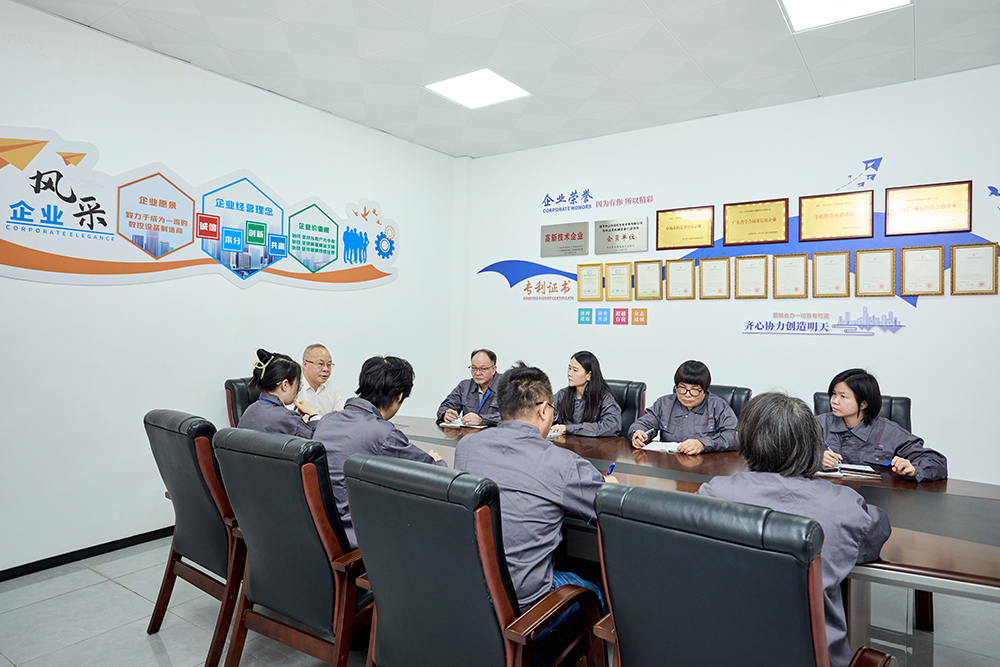
Zhongshan Nuoxin Intelligent Equipment Co., Ltd. was established in 2004 and is a high-tech enterprise. The company specializes in the research and production of precision processing equipment such as CNC numerical control lathes, turning-milling combined machines, and vertical machining centers. At the same time, the company is dedicated to providing customers with support for precision part processing technology and CNC equipment operation training, as well as handling after-sales issues.
The company has been deeply engaged in the CNC lathe industry for over 20 years and has successively received titles such as "Guangdong Province High-tech Enterprise" and "Zhongshan Machinery Chamber Council Member Unit". It is committed to creating more value for its customers and providing comprehensive solutions that meet the processing needs of customers.
Located in the Industrial Development Zone of Zhongshan City, Guangdong Province, with a self-owned factory area of over 20,000 square meters, the company houses a professional design and production manufacturing team. Continuous innovation development, standardized production operations, and strict product quality control management have enabled the company to successfully apply for a number of product invention and utility model patents and successfully pass international ISO9001 and ISO14001 system certifications.
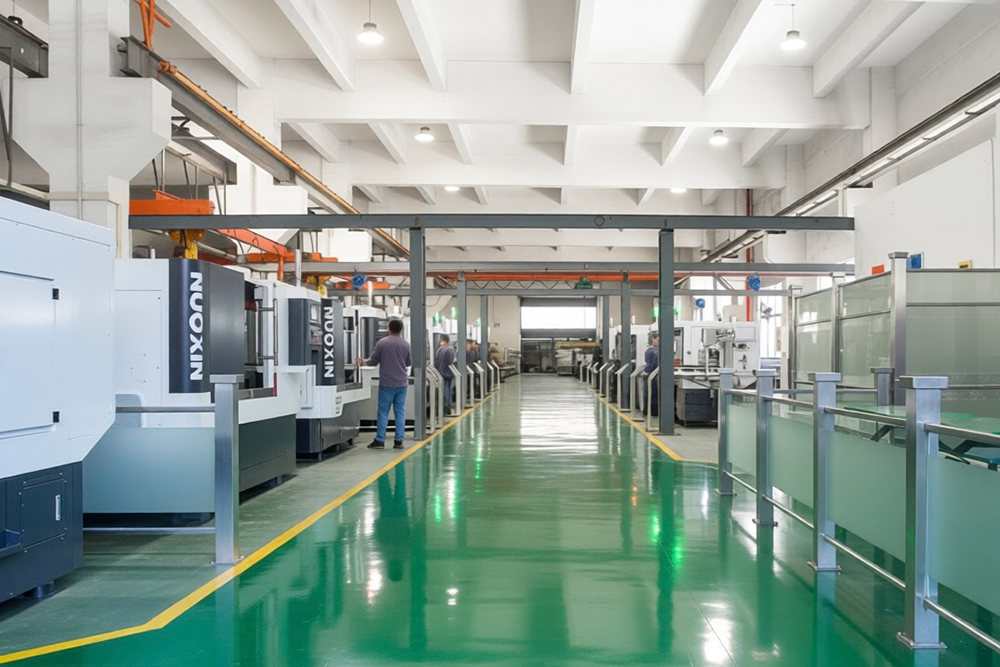
The company's product quality and after-sales service are highly recognized by customers. Its business scope has covered aviation, automobiles, motorcycles, construction machinery, home appliances, plumbing and bathroom, lighting, medical and optoelectronics, etc. The company also provides system technical service support to customers, from pre-sale technical consultation to in-sale installation and commissioning and technical training, to after-sale maintenance services and customer follow-ups. Our after-sales team can respond promptly and solve your worries at any time.
Looking to the future, our company will consistently adhere to the business philosophy of "honesty, responsibility, innovation, and win-win", and implement the quality policy of "quality improvement, customer satisfaction first". We will continue to improve and provide continuous services to offer customers higher-quality products and more satisfactory services! We look forward to your visit and cooperation!
A slant bed computer lathe features a bed inclined at a typical 30-degree or 45-degree angle. This configuration shortens the structural distance between the tool tip, linear guide rails, and structural casting. The resulting geometry reduces the leverage effect of cutting forces, minimizing micro-deflections under heavy loads. Furthermore, this design facilitates direct gravimetric chip fall, preventing hot cutting chips from accumulating on the sliding ways, which preserves the accuracy of the ball screws and guideways.
Live tooling allows driven tools (milling cutters, drills, taps) to rotate while mounted in the turret. In standard setups, a turned piece must be removed and loaded onto a secondary vertical machining center to mill keyways or drill cross-holes. A turn-mill center completes both turning and milling operations in a single setup, eliminating human handling errors, reducing labor costs, and maintaining near-perfect concentricity and positioning tolerance.
Yes. All Nuoxin CNC machinery is built with standardized communication interfaces to support automated manufacturing cells. This includes compatibility with automatic bar feeders for continuous bar stock machining, as well as digital I/O handshakes for articulated robotic arm loaders. These integrations enable lights-out night shift operation with zero human intervention.
We supply and integrate world-class motion controllers depending on our customer's shop floor preferences. Options include Fanuc, Siemens, Mitsubishi, and Syntec. All systems are fully localized with multi-lingual user interfaces, supporting standard ISO G-code programs as well as conversational programming modes.
Our comprehensive service structure covers the entire operational lifecycle of the equipment. We provide pre-sale technical assessments, design custom tool configurations, and execute in-depth commissioning. After shipping, we offer digital troubleshooting support, operator training courses, and rapidly distribute certified spare parts to minimize any unexpected shop floor downtime.
 Nuoxin