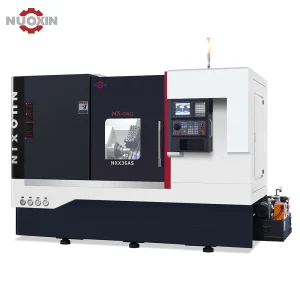
Explore our core engineering catalog, designed for ultra-high speed rotation, dynamic repeatability, and extreme rigidity.
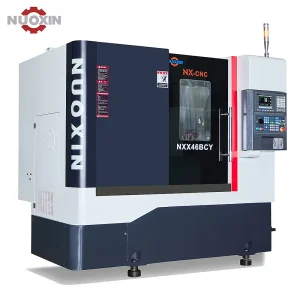
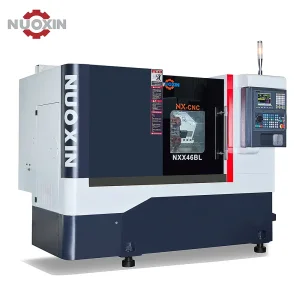
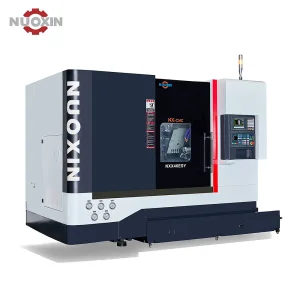
The global CNC machine tool market is witnessing an unprecedented transition towards automated, high-precision machining centers. CNC lathes (Mesin CNC Lathe) form the core of subtractive manufacturing, playing an irreplaceable role in industrial progress. As modern engineering demands tolerances down to the sub-micron level, heavy manufacturing hubs in Europe, North America, and East Asia are shifting from basic 2-axis lathes to advanced, multi-axis turn-mill configurations.
Within developing economies like Indonesia (specifically across industrial estates in Cikarang, Karawang, Batam, and Surabaya), the adoption of "Mesin CNC" has surged dramatically. Manufacturers are replacing legacy hardware with OEM slant-bed structures to support high-throughput automotive supply chains, electronics casing fabrications, and local agricultural machinery production. This transformation is highly driven by the necessity for local parts self-sufficiency.
Purchasing direct-from-factory OEM machines allows companies to bypass steep third-party markups. Customized spindle designs, specific control system architectures (such as Fanuc, Syntec, or Mitsubishi), and optimized tooling turrets are tailored directly to the client's mechanical workflows. This approach provides an exact balance between capital expenditure (CAPEX) and long-term production profitability.
Understanding the core components that govern machining accuracy, thermal stability, and structural longevity.
Traditional flat-bed lathes are suitable for simple maintenance and low-volume operations, but high-production environments require a slant-bed design. Typically oriented at 30° or 45°, this structure offers distinct technical advantages:
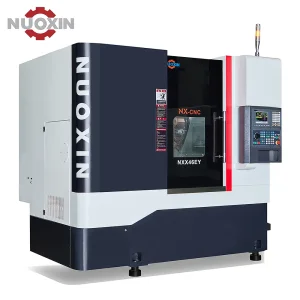
Modern manufacturing demands single-setup machining to eliminate cumulative error. Our advanced models, such as the NXX-46ESY Twin-Spindle Turn-Mill Center, integrate dual opposed spindles alongside an automated tool turret featuring live tooling. By executing turning, off-center cross milling, drilling, and tapping on one machine, workpiece handling is eliminated. This slashes cycle times and ensures concentricity between front and back operations.
Empowering global factory floors with advanced machine tool manufacturing, deep automation integration, and lifetime service support.
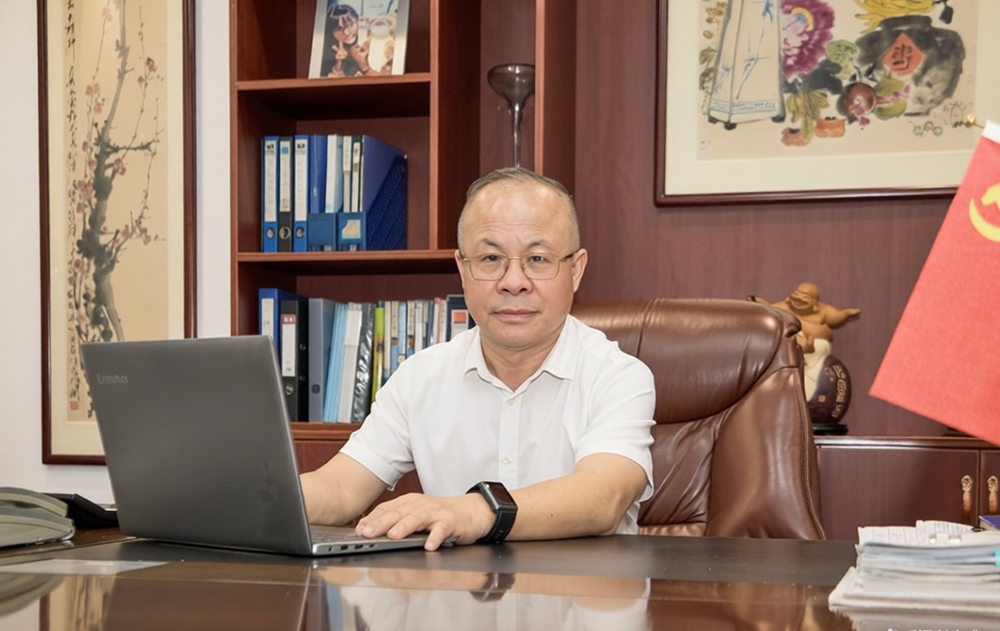
Established in 2004, Zhongshan Nuoxin Intelligent Equipment Co., Ltd. is recognized as a high-tech enterprise. For over 20 years, we have specialized in the research, design, and production of high-grade CNC numerical control lathes, turn-milling combined machines, and vertical machining centers.
Our modern manufacturing facility is situated in the Industrial Development Zone of Zhongshan City, Guangdong Province, spanning a self-owned area of over 20,000 square meters. Staffed by an experienced design and production manufacturing team, our standardized production lines adhere to strict quality control systems, successfully securing multiple product inventions and utility model patents.
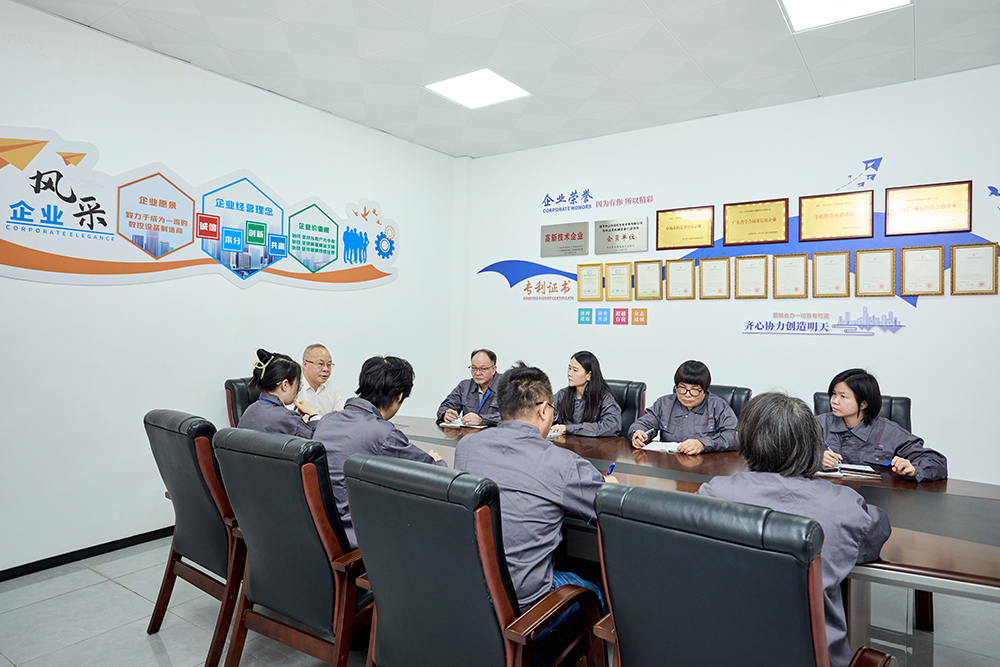
Our machine tools are deployed across multiple demanding industries, including aviation, automotive components, consumer electronics, plumbing and bathroom fittings, lighting hardware, and medical device manufacturing.
We believe a premium machine is only as good as the service backing it. That is why we provide complete technical lifecycle service support. From initial pre-sale technical consultations and component cycle-time evaluations to on-site factory installation, control programming training, and rapid after-sales engineering assistance, we support your operations every step of the way.
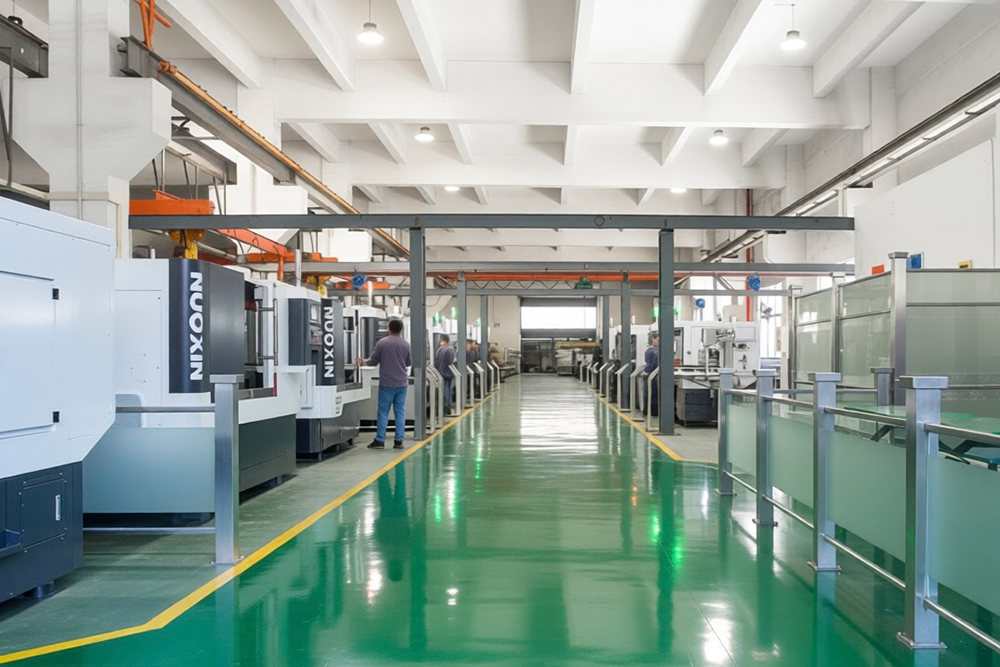
Adhering to our core values of "honesty, responsibility, innovation, and win-win", we maintain certified compliance with international ISO9001 and ISO14001 management systems. Every raw casting is seasoned, and every guideway is precision ground and aligned using laser interferometry to ensure accuracy and structural integrity over years of intensive multi-shift operation.
Deploying targeted OEM lathe configurations to optimize efficiency and minimize downtime in specialized markets.
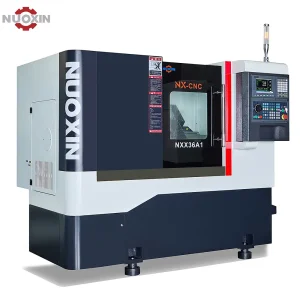
High-volume production of steering knuckles, brake cylinders, drive shafts, and engine valves. Requires machines equipped with gang tool arrays or rapid servo turrets (such as the NXX-36A1) to minimize non-cutting times, delivering high repeatability to meet automotive tolerances.
Machining complex orthopedic implants, bone screws, and dental attachments from biocompatible titanium and cobalt-chrome alloys. The dual spindles and live tooling of the NXX-46ESY allow for complete machining of intricate geometries in a single cycle, preventing part handling scratches.
Production of high-tolerance connector housings, fiber optic adapters, and camera barrels. Our lathes utilize high-speed direct-drive spindles and ultra-precise linear guides to deliver clean surface finishes, minimizing the need for secondary polishing.
Understand the engineering variables that influence machine acquisition costs and total cost of ownership (TCO).
When requesting quotes for a Mesin CNC Lathe, prices can vary based on several critical configurations. Understanding these factors helps you make an informed decision when evaluating our factory pricelists:
The brain of the machine. Implementing international standard controllers like Fanuc (e.g., Fanuc 0i-TF) or Mitsubishi increases the initial cost but ensures global support and programming ease. Domestic or regional controllers (like Syntec or GSK) offer cost-effective alternatives for standard operations.
Linear roller guide ways are ideal for high-speed, light-to-medium metal removal, offering fast traverse rates and lower cost. For heavy-duty intermittent cutting of hard metals, box ways provide maximum dampening and rigidity, but require complex hand-scraping, which increases manufacturing costs.
Adding a programmable Y-axis and high-resolution C-axis spindle encoder transforms a standard turning lathe into a comprehensive machining center. This configuration involves complex multi-axis interpolation software, secondary servo drives, and live tool turrets, which increases structural costs but offers a strong return on investment by reducing setup times.
High-precision angular contact ball bearings (e.g., P2/P4 class) and higher motor ratings (kW) allow for sustained high-torque operations on hard alloys. These premium components improve spindle reliability and support longer operational lifetimes.
Discover our specialized turning and milling solutions optimized for complex manufacturing demands.
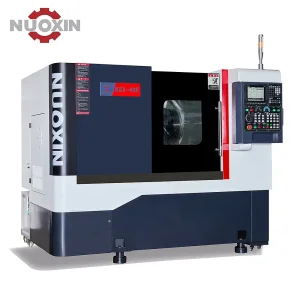
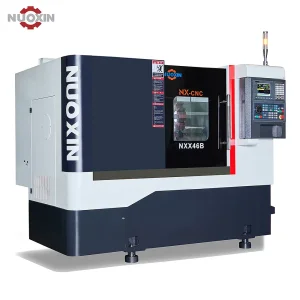
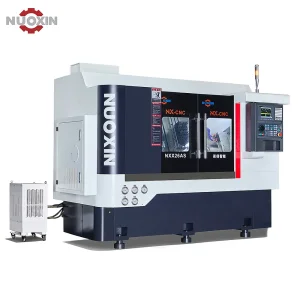
Developing machine tools that align with Industry 4.0 paradigms, intelligent automation, and sustainable manufacturing practices.
Thermal growth of the spindle and ball screws can affect machining accuracy during extended shifts. Future OEM iterations integrate real-time thermal sensor feedback loops within the controller, dynamically compensating tool offsets to maintain tolerances under variable operating temperatures.
Integrating vibration sensors and current-monitoring software directly within the linear guideways and spindles allows the machine tool to monitor tool wear and bearing deterioration. This real-time diagnostic approach flags potential issues before a crash occurs, reducing unplanned downtime.
Labor shortages are driving the demand for automated loading systems. The flat, wide design of our slant-bed enclosures supports direct integration with top-loading gantry systems or floor-mounted collaborative robots (cobots). This enables continuous "lights-out" manufacturing during overnight shifts.
Expert insights addressing key inquiries regarding engineering, configuration, and machine procurement.
 Nuoxin