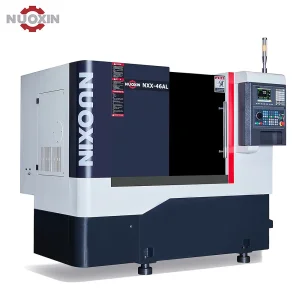
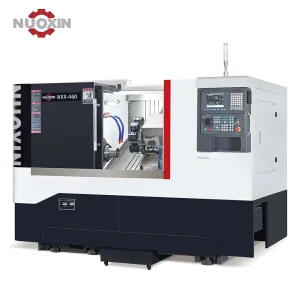
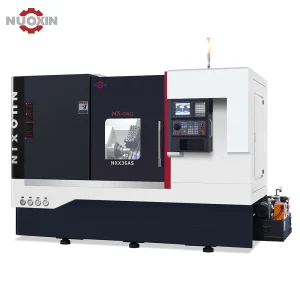
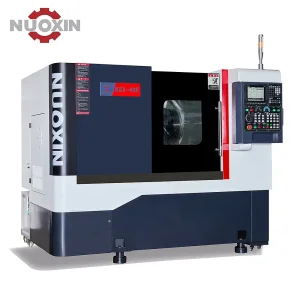
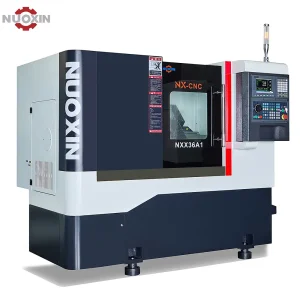
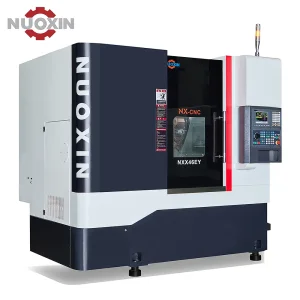
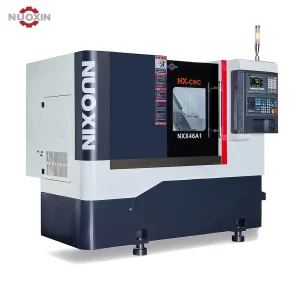
Explore our elite range of slant-bed, twin-spindle, and multi-axis turn-mill centers configured for advanced production environments.
Executive Sourcing Summary: In the current era of industrial modernization, large-scale CNC turning and multi-tasking machinery have transitioned from standard single-axis units to hybrid, multi-axis, integrated manufacturing systems. Today's global sourcing departments do not look only at initial acquisition costs; they demand documented thermal stability, high load capacities, multi-spindle processing throughput, and comprehensive OEM support infrastructures.
Slant-bed configurations (typically 30° to 45°) optimize vibration absorption and improve thermal stabilization during continuous runs. This geometry ensures gravity-assisted chip management, protecting the linear guideways and ball screws from premature wear, making them ideal for heavy-duty metal removal.
The combination of Y-axis, twin-spindles, and live rotary tool turrets allows parts to go from raw stock to finished components on a single machine. By eliminating secondary processing setups, manufacturers reduce tolerance stack-up errors and operational lead times.
Procuring through certified OEM partners lowers risk. Leading plants provide customized castings, tailored CNC system controllers (Syntec, Fanuc, Siemens), and certified components that meet local standards like CE and UL.
Zhongshan Nuoxin Intelligent Equipment Co., Ltd. was established in 2004 and is a high-tech enterprise. The company specializes in the research and production of precision processing equipment such as CNC numerical control lathes, turning-milling combined machines, and vertical machining centers. At the same time, the company is dedicated to providing customers with support for precision part processing technology and CNC equipment operation training, as well as handling after-sales issues.
The company has been deeply engaged in the CNC lathe industry for over 20 years and has successively received titles such as "Guangdong Province High-tech Enterprise" and "Zhongshan Machinery Chamber Council Member Unit". It is committed to creating more value for its customers and providing comprehensive solutions that meet the processing needs of customers.
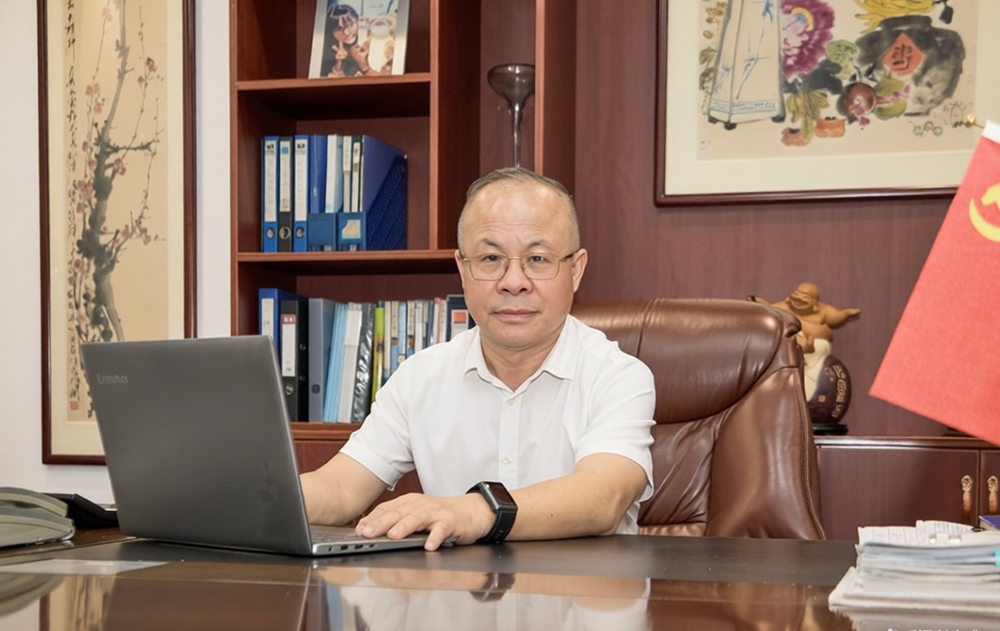
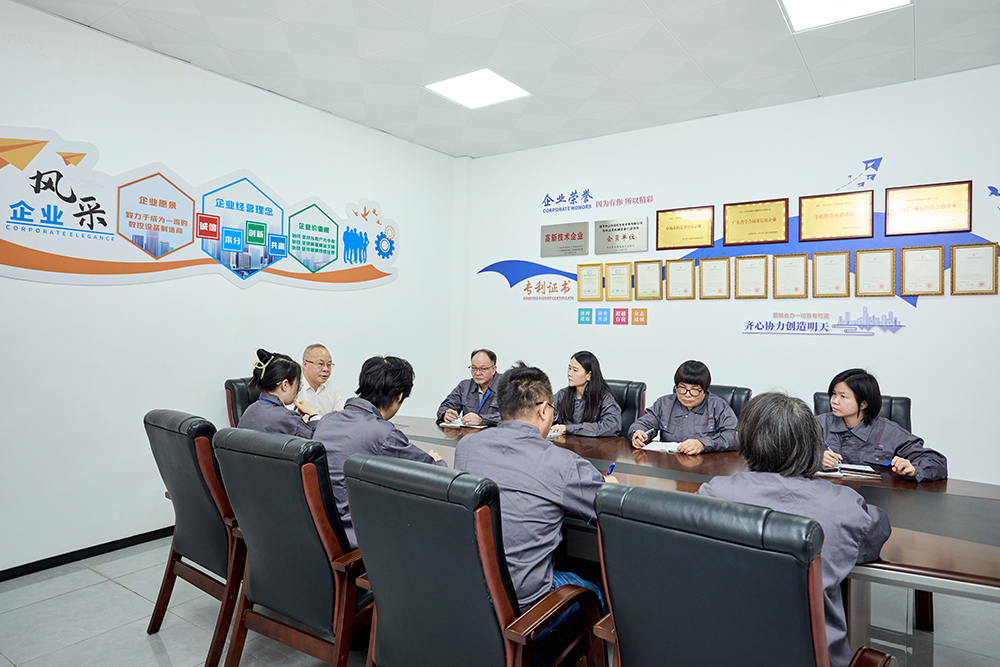
The company is located in the Industrial Development Zone of Zhongshan City, Guangdong Province, with a self-owned factory area of over 20,000 square meters. It has a professional design and production manufacturing team. Continuous innovation development, standardized production operations, and strict product quality control management have enabled the company to successfully apply for a number of product invention and utility model patents and successfully pass international ISO9001 and ISO14001 system certifications.
The company's product quality and after-sales service are highly recognized by customers. Its business scope has covered aviation, automobiles, motorcycles, construction machinery, home appliances, plumbing and bathroom, lighting, medical and optoelectronics, etc. The company also provides system technical service support to customers, from pre-sale technical consultation to in-sale installation and commissioning and technical training, to after-sale maintenance services and customer follow-ups. Our after-sales team can respond promptly and solve your worries at any time.
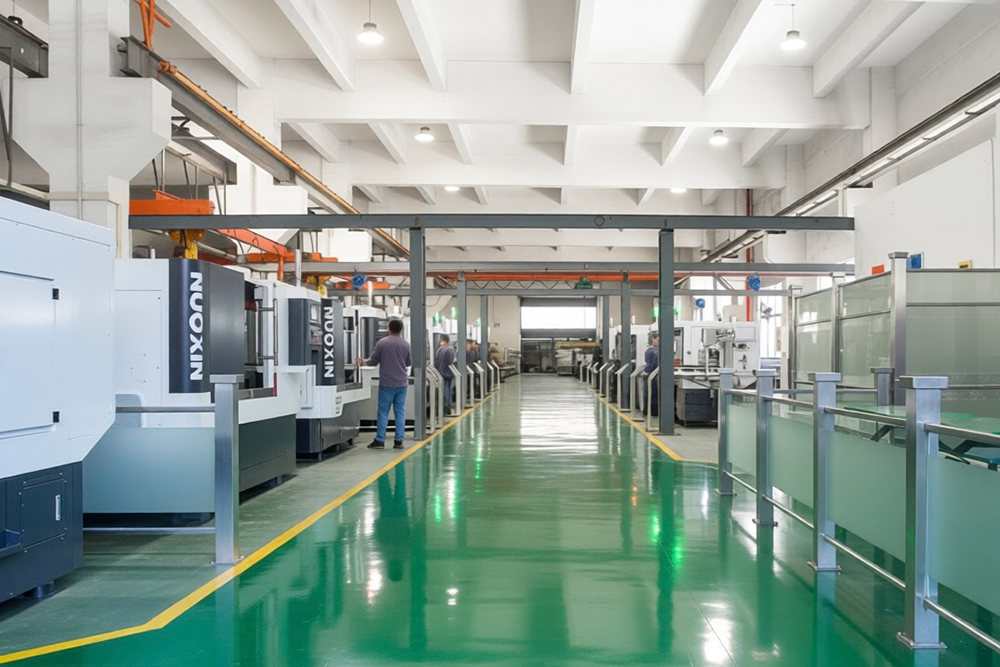
Our Future Outlook: Looking to the future, our company will consistently adhere to the business philosophy of "honesty, responsibility, innovation, and win-win", and implement the quality policy of "quality improvement, customer satisfaction first". We will continue to improve and provide continuous services to offer customers higher-quality products and more satisfactory services! We look forward to your visit and cooperation!
Understanding the technical parameters that control pricelists and machinery build configurations. Review standard industrial specs below:
| Machine Model Family | Structural Type | Spindle Options | Tooling Layout | Primary Industrial Applications |
|---|---|---|---|---|
| NXX-36A Series | Slant Bed | Single / Twin-Spindle | Gang Tooling / Twin-Gang | Optoelectronics, Medical, Micro-Electronics |
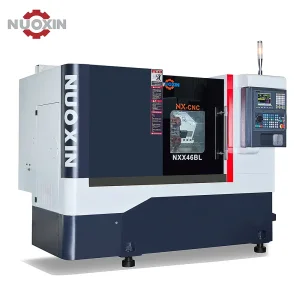
| NXX-46A / AL Series | Slant Bed / Extended | Single Spindle | Gang Tooling System | Automotive Parts, Valves, Plumbing Fitting |
| NXX-46D Series | Slant Bed | Hydraulic Tailstock | Rotary Indexing Turret | Shaft Machining, Heavy-Duty Hardware |
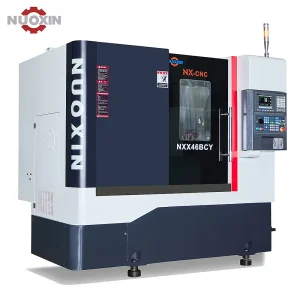
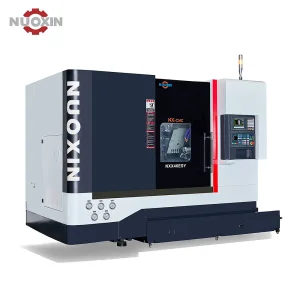
| NXX-46E / EY / ESY | Slant Bed Multi-Axis | Twin Spindle Options | Servo Live Tooling (Y-Axis) | Aviation Aerospace, Complex Hydraulics |
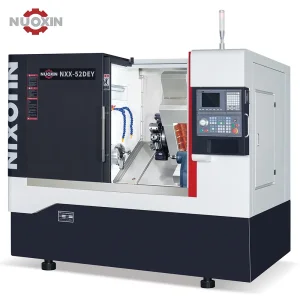
| NXX-52DEY Series | Heavy Turn-Mill | Dual Spindles (Y-Axis) | Servo Power Turret | Oil & Gas Valves, Heavy Machinery Parts |
When requesting quotes for custom industrial turning equipment, the following engineering factors determine final factory pricing:
Ensuring international operations align with global safety, electrical, and quality criteria.
Our manufacturing environments are certified under strict quality and environmental management workflows. Standard operating procedures dictate the construction, alignment, and long-term testing of every casting and linear motion component.
For global export, electrical cabinets are configured to meet local power grids (220V, 380V, 415V/480V) and follow rigorous CE, UL, and regional safety specifications for automated work cells.
From initial design consultations to complete remote video setup instructions and hands-on operational training, our service team handles machine commissioning, tooling setup optimizations, and troubleshooting support.
How high-end CNC lathes are evolving to meet Industry 4.0 expectations and hyper-precision demands.
The distinction between milling and turning machines is rapidly vanishing. High-precision manufacturing relies on multi-axis, twin-spindle hybrid layouts capable of fully machining complex aerospace components or custom medical implants without manual re-fixturing.
Modern production facilities run data-driven operations. Newer CNC lathe configurations include sensor networks monitoring spindle temperature, vibration frequency, and motor current usage in real time. This information enables predictive maintenance, reducing costly unplanned downtime.
To address labor shortages and increase productivity, modern machining cells integrate standard bar feeders, gantry robots, or articulating robotic arms. This enables uninterrupted lights-out production runs for components like fittings, automotive parts, and fasteners.
Thermal expansion during high-speed spindle operations is a major source of dimensional deviation. Intelligent CNC controls run advanced thermal compensation algorithms, dynamic cooling channels, and symmetric casting configurations to maintain sub-micron tolerances throughout long production runs.
As global environmental regulations tighten, machine designs must optimize energy consumption and reduce coolant waste. Our equipment leverages energy-efficient servo drives and optimized lubrication systems to minimize oil consumption and waste outputs.
Answers to critical technical and logistical questions to assist international buyers during the sourcing process.
Q1: What are the primary advantages of a slant-bed CNC lathe over a flat-bed lathe?
A: Slant-bed lathes feature a bed set at an angle (typically 30° or 45°). This configuration provides superior rigidity, improves chip flow, and shortens the distance from the tool tip to the guide rails. These design elements enhance cutting stability, improve surface finishes, and extend tool life during heavy roughing cuts.
Q2: How does live tooling (turn-mill center capability) benefit processing throughput?
A: Live tooling incorporates rotating motorized tools in the turret. This design allows the lathe to perform milling, drilling, and tapping on the workpiece without removing it from the spindle. Combining these operations saves setup time, eliminates secondary fixturing steps, and prevents dimensional stack-up errors.
Q3: What factors determine the pricelist of a customized OEM CNC Lathe?
A: Pricing is driven by choice of controller system (FANUC, Syntec, Siemens), spindle size and power, linear guide quality, axis configurations (e.g., adding a Y-axis or sub-spindle), tool capacity, tailstock configuration, and automated feeding systems.
Q4: How do you verify and control product quality during production?
A: We use a standardized production process verified by ISO 9001. Castings undergo stress relief to prevent distortion. Critical surfaces are precision-ground, and final machine assemblies undergo laser interferometer accuracy checks and continuous test runs before shipping.
Q5: What are the average lead times for custom OEM machinery builds?
A: Lead times depend on configuration complexity. Standard models can ship in 30-45 days, while highly customized turn-mill centers or integrated robotic automation lines generally require 60-90 days from order confirmation to shipping preparation.
Review the remainder of our advanced catalog, containing specialized turn-mill designs and robust rotary-turret slant bed series.
 Nuoxin