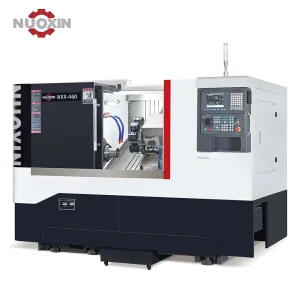
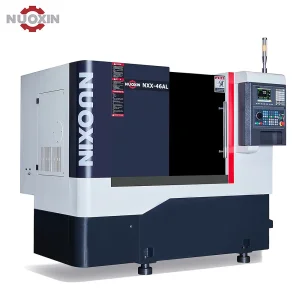
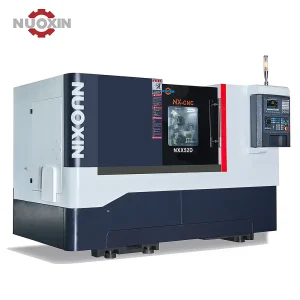
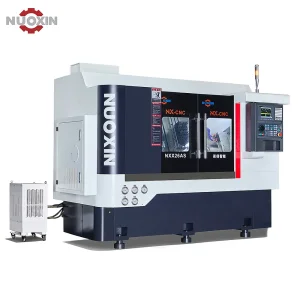
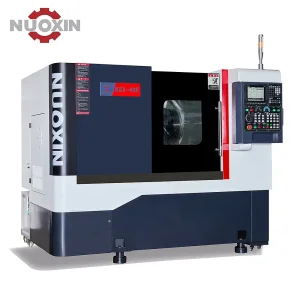
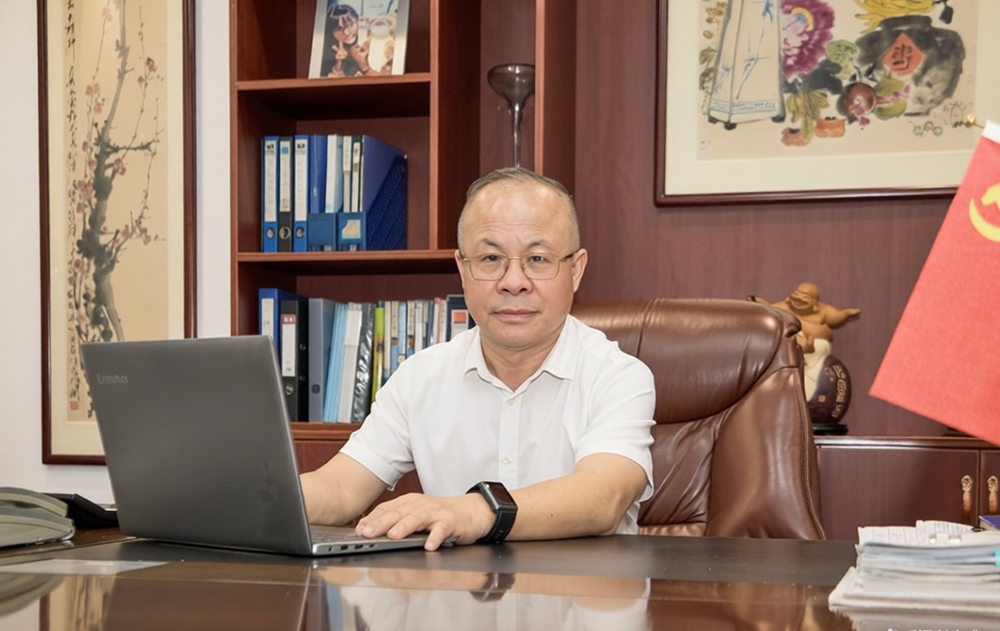
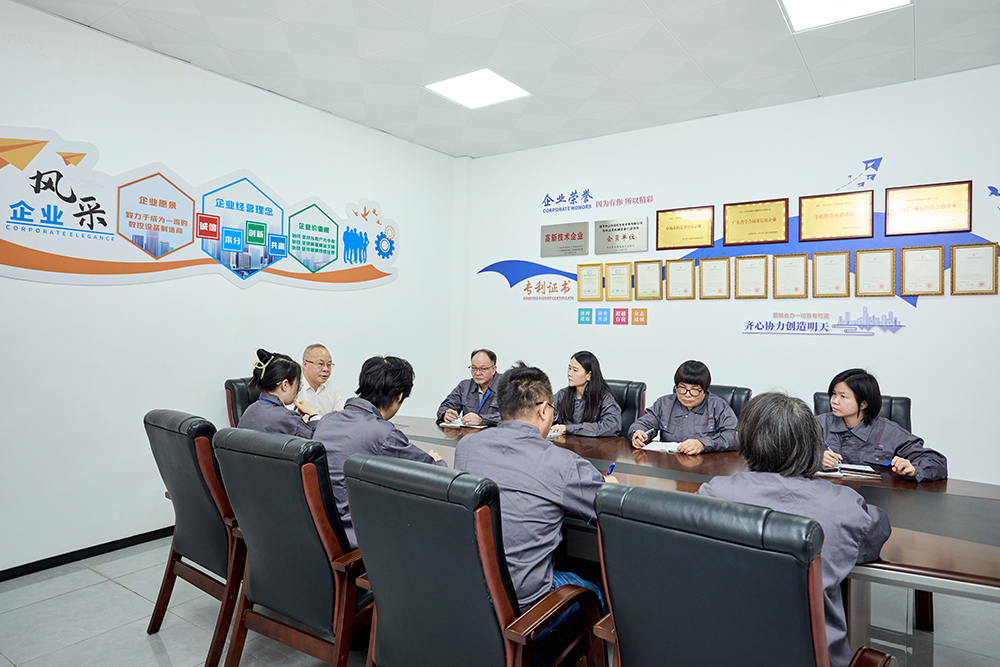
Zhongshan Nuoxin Intelligent Equipment Co., Ltd. was established in 2004 and is a high-tech enterprise. The company specializes in the research and production of precision processing equipment such as CNC numerical control lathes, turning-milling combined machines, and vertical machining centers. At the same time, the company is dedicated to providing customers with support for precision part processing technology and CNC equipment operation training, as well as handling after-sales issues.
The company has been deeply engaged in the CNC lathe industry for over 20 years and has successively received titles such as "Guangdong Province High-tech Enterprise" and "Zhongshan Machinery Chamber Council Member Unit". It is committed to creating more value for its customers and providing comprehensive solutions that meet the processing needs of customers.
The global manufacturing ecosystem is experiencing a major paradigm shift toward ultra-high efficiency, automation, and consolidation of operations. At the epicenter of this shift is the twin spindle twin turret CNC lathe. Industrial sectors worldwide are moving away from traditional single-spindle machines that require manual workpiece relocation or multiple setups. Instead, modern shops rely on multi-tasking platforms that turn raw bar stock into finished, complex parts in a single setup.
In highly industrialized areas like North America, the European Union, and East Asia, manufacturers face compounding pressures from labor scarcity, rising operational costs, and shrinking lead times. Twin spindle twin turret configurations solve these issues by allowing simultaneous, parallel machining. While the main spindle runs operations on the first side of a workpiece via the upper turret, the sub-spindle (or twin spindle) works on the reverse side using the lower turret. This parallel processing cuts overall cycle times by 30% to 50% and completely eliminates manual handling between operations, ensuring high precision and repeatability.
Widely integrated across automotive, aerospace, and medical production hubs globally to achieve zero-defect, high-throughput manufacturing.
By executing dual-axis concurrent cuts, manufacturers optimize their floor space footprint and reduce total capital investment per unit yield.
Automation integrations such as bar feeders, part catchers, and unloaders enable continuous, unmanned lights-out manufacturing shifts.
Modern machine tool technology focuses on automation, digital control systems, and high precision. As components grow more complex and tolerances shrink to the single-micron range, custom twin spindle twin turret lathes are adapting in several key areas:
A key advancement is the sub-spindle's ability to sync rotation speed with the main spindle on the fly. This allows the machine to hand off parts at full spindle speeds without stopping. This prevents marking on the workpiece and keeps the cycle running smoothly.
Modern double turret lathes offer live tooling on both turrets. When paired with C-axis spindle indexing and Y-axis travel, these lathes perform off-center drilling, tapping, and complex pocket milling. This makes the lathe a complete turning-milling center, reducing the need for secondary milling setups.
High-speed, long-shift runs generate heat in the spindles and axes. Advanced sensors monitor thermal growth, and the CNC controller makes real-time, micro-level adjustments. This ensures consistent dimensions from the first part in the morning to the last part of a 24-hour run.
Multi-axis twin turret lathes excel at producing complex, round parts with operations on both ends. Below are common industrial applications where this configuration is highly effective:
High-volume production of transmission shafts, CV joints, engine valves, and turbocharger components requiring high dynamic balance and tight tolerances.
Complex fuel injection nozzles, connectors, and hydraulic actuators machined from tough alloys like Titanium, Inconel, and stainless steel.
Bone screws, dental implants, surgical instruments, and orthopedic devices requiring surgical-grade surface finishes and intricate micro-machining.
Precision brass valves, liquid connectors, and sanitary fittings that need internal threads, cross-holes, and flats cut quickly in high volumes.
Connecting CNC lathes to plant-wide networks via MTConnect or OPC UA. Real-time monitoring tracks cycle times, tool wear, and machine health, feeding this data directly to Cloud ERPs.
Moving beyond bar feeders to fully integrated robotic gantry loaders and AMR (Autonomous Mobile Robot) drop-offs. This enables continuous, unattended production over weekends.
Using vibration, acoustic, and motor-load sensors to detect tool wear or breakage early. The machine automatically switches to a sister tool, preventing damage and scrap parts.
Using energy-efficient, variable-frequency drives, eco-friendly mist lubricants, and smart power management to reduce electricity use by up to 25% without sacrificing output.
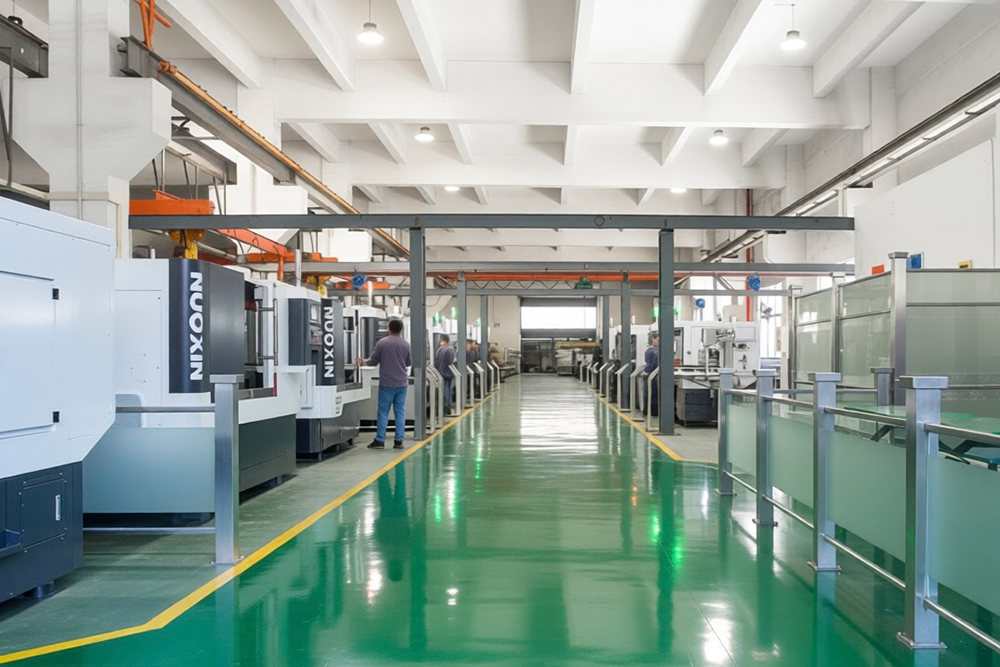
As a leading CNC builder, Zhongshan Nuoxin Intelligent Equipment Co., Ltd. offers robust manufacturing capabilities that guarantee quality, efficiency, and reliability for our global partners:
We believe high-quality service is just as important as reliable machinery. Zhongshan Nuoxin provides complete technical support, from pre-sale planning to long-term post-installation service:
We analyze your target part designs, run cycle-time simulations, and recommend the best machine configurations and tooling setups to maximize productivity.
Our experienced technicians manage the physical installation, align the spindles, and provide on-site training for your programming and setup teams.
We maintain an inventory of original spare parts and provide rapid-response technical troubleshooting to keep your production running smoothly.
The main advantage is the ability to machine both sides of a part simultaneously. While the main spindle holds the raw bar stock for initial machining, the sub-spindle picks up the partially completed part to machine the second side. Doing this in a single machine setup cuts cycle times by 30-50% and reduces manual handling errors.
The CNC controller synchronizes the rotational speeds of both spindles (e.g., at 3000 RPM). The sub-spindle moves forward along the Z-axis, grips the part extending from the main spindle, and the main spindle's chuck releases as the parting tool finishes the cut. The sub-spindle then retracts to complete the back-work.
Live tooling refers to motor-driven cutting tools (like drills, taps, and end mills) mounted inside the indexing turret. This lets the lathe perform milling, off-center drilling, and tapping without needing to move the part to a separate vertical machining center.
Slant bed designs (typically 30, 45, or 60 degrees) provide a rigid machine structure and make it easy for chips and coolant to fall away. This efficient chip removal prevents heat buildup and chips getting caught in the workspace, which is crucial for high-speed automated production.
The Y-axis moves the tool perpendicular to the spindle centerline. This allows the machine to mill flat surfaces, cut keyways, and drill off-center holes. Without a Y-axis, milling is limited to paths that follow the C-axis rotation, which limits the shapes you can machine.
We use advanced testing tools, including laser interferometers, to check positioning accuracy. We also perform dynamic balance testing on spindles and execute load tests under real cutting conditions before shipping each machine from our ISO9001 certified facility.
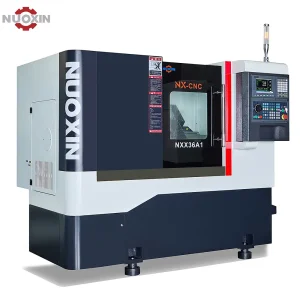
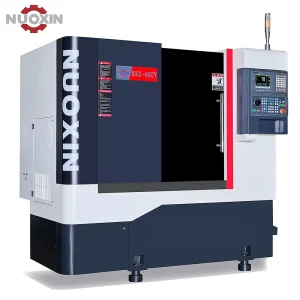
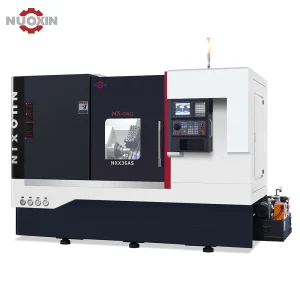
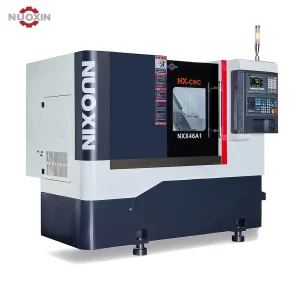
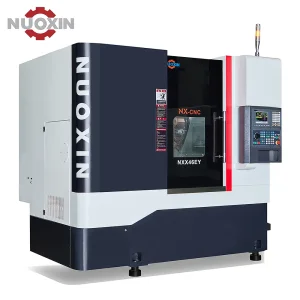
Looking to the future, our company will consistently adhere to the business philosophy of "honesty, responsibility, innovation, and win-win", and implement the quality policy of "quality improvement, customer satisfaction first". We will continue to improve and provide continuous services to offer customers higher-quality products and more satisfactory services! We look forward to your visit and cooperation!
Request Custom Machine Specifications Nuoxin